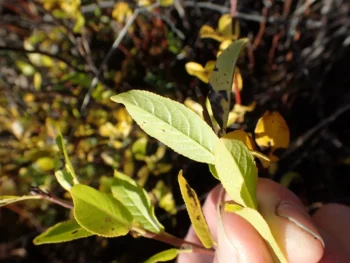
Blueberry Willow: A Hardy Native Shrub for Cold Climate Gardens
If you’re gardening in the far north or high mountains and struggling to find plants that can handle your brutal winters, meet your new best friend: the blueberry willow (Salix myrtillifolia). This tough-as-nails native shrub laughs in the face of temperatures that would make other plants cry, making it a perfect choice for gardeners in some of North America’s most challenging climates.
What Makes Blueberry Willow Special?
Don’t let the name fool you – this isn’t related to actual blueberries, but it gets its common name from its distinctive small, rounded leaves that bear a striking resemblance to blueberry foliage. As a perennial shrub, blueberry willow typically stays compact, usually reaching less than 13-16 feet in height with multiple stems arising from the base.
This remarkable plant goes by several scientific synonyms, including Salix lingulata and Salix pseudocordata, which you might encounter in older gardening references or plant catalogs.
Where Does Blueberry Willow Call Home?
Blueberry willow is a true North American native, naturally occurring across Alaska, Canada, and select areas in the lower 48 states. You’ll find it thriving in Alberta, British Columbia, Manitoba, New Brunswick, Ontario, Saskatchewan, Yukon, Northwest Territories, Nunavut, as well as Colorado, Wyoming, and Labrador. This impressive geographic distribution speaks to its incredible adaptability to cold climates.
- Species observed
- No observations
Perfect Spots for Planting
This versatile shrub shines in several garden scenarios:
- **Naturalistic and wildlife gardens** where you want to support local ecosystems
- **Rock gardens and alpine settings** where its compact size and cold tolerance are assets
- **Erosion control projects** along slopes or waterways
- **Wetland restoration areas** where it can handle fluctuating moisture levels
Growing Conditions That Make It Happy
Blueberry willow has a facultative wetland status across its range, meaning it usually loves wet feet but can tolerate drier conditions when needed. This flexibility makes it particularly valuable for gardeners dealing with areas that might flood in spring but dry out later in the season.
For best results, provide:
- Full sun to partial shade (it’s quite adaptable)
- Moist to wet soils with good organic content
- USDA hardiness zones 1-6 (this plant thrives where others fear to grow!)
- Areas with good air circulation
Wildlife and Pollinator Benefits
One of the biggest reasons to love blueberry willow is its incredible value to wildlife. The early spring catkins appear before the leaves, providing crucial nectar and pollen when few other plants are blooming. Bees, flies, and other pollinators depend on these early food sources after a long winter.
Beyond pollinators, willows in general are powerhouse plants for supporting biodiversity, and blueberry willow is no exception in providing habitat and food for various wildlife species.
Planting and Care Tips
The beauty of blueberry willow lies in its low-maintenance nature once established:
- **When to plant**: Spring is ideal, giving the plant a full growing season to establish
- **Watering**: Keep consistently moist the first year; after that, it’s quite drought-tolerant
- **Pruning**: Minimal pruning needed – just remove dead or damaged branches
- **Fertilizing**: Generally unnecessary in most soils
- **Maintenance**: This is truly a plant it and forget it kind of shrub
Is Blueberry Willow Right for Your Garden?
Blueberry willow is an excellent choice if you:
- Garden in zones 1-6 and need extremely cold-hardy plants
- Want to support native wildlife and pollinators
- Have wet or periodically flooded areas that need attractive plantings
- Appreciate low-maintenance plants that look good year-round
- Are working on naturalistic landscaping or restoration projects
However, gardeners in warmer zones or those seeking tropical aesthetics might want to look elsewhere, as this plant is specifically adapted to cold climates and may struggle in heat.
The Bottom Line
For cold-climate gardeners, blueberry willow represents the holy grail: a beautiful, native plant that’s virtually indestructible once established. Its early blooms support crucial pollinators, its attractive foliage provides season-long interest, and its tough constitution means you can plant it and focus your energy on more finicky garden residents. If you’re gardening where winter means business, blueberry willow deserves a spot in your landscape.