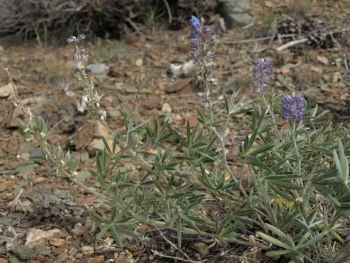
Bluebonnet Lupine: A Desert Native That Brings Color and Wildlife to Your Garden
Looking for a stunning native perennial that can handle tough growing conditions while supporting local wildlife? Meet the bluebonnet lupine (Lupinus palmeri), a remarkable southwestern native that’s perfect for water-wise gardening. This hardy perennial brings gorgeous purple-blue flower spikes to desert landscapes and xeriscapes, all while requiring minimal care once established.
What Makes Bluebonnet Lupine Special?
Bluebonnet lupine is a true native gem, naturally occurring across the southwestern United States. As a perennial forb, this plant lacks woody tissue but returns year after year with its distinctive palmate leaves and eye-catching flower spikes. Unlike annuals that need replanting, this lupine establishes itself as a reliable garden performer that gets better with age.
You might also see this plant referenced by its botanical synonym, Lupinus argenteus var. palmeri, in some older gardening references, but Lupinus palmeri is the accepted current name.
Where Does Bluebonnet Lupine Grow Naturally?
This lupine calls the American Southwest home, naturally growing across Arizona, California, Nevada, New Mexico, and Utah. It thrives in the desert and semi-arid regions of these states, making it perfectly adapted to challenging conditions that would stress many other garden plants.
- Species observed
- No observations
Why Plant Bluebonnet Lupine in Your Garden?
There are several compelling reasons to consider adding this native lupine to your landscape:
- Drought tolerance: Once established, it needs minimal supplemental watering
- Pollinator magnet: The purple-blue flower spikes attract bees, butterflies, and other beneficial insects
- Low maintenance: Requires little care compared to non-native alternatives
- Native ecosystem support: Provides food and habitat for local wildlife
- Soil improvement: Like other lupines, it fixes nitrogen in the soil
- Seasonal interest: Attractive palmate foliage and showy flower displays
Perfect Garden Settings
Bluebonnet lupine shines in specific garden styles and situations:
- Xeriscapes and water-wise gardens
- Native plant landscapes
- Desert-themed gardens
- Pollinator gardens
- Rocky or sandy areas where other plants struggle
- Naturalized meadow settings
Growing Conditions and Care
Success with bluebonnet lupine comes from mimicking its natural desert habitat:
Sunlight: Provide full sun exposure for best flowering and overall health.
Soil: Well-draining soil is absolutely critical. Sandy, rocky, or gravelly soils work best. Heavy clay soils that retain moisture can cause root rot.
Water: Drought tolerant once established, but provide regular water during the first growing season. After establishment, water sparingly—overwatering is more harmful than underwatering.
Climate: Hardy in USDA zones 4-9, though this can vary based on elevation and local microclimates within its native range.
Planting and Care Tips
When to plant: Fall planting often works best, allowing roots to establish during cooler weather.
Soil preparation: If your soil doesn’t drain well naturally, amend with coarse sand, perlite, or small gravel to improve drainage.
Spacing: Give plants adequate space for air circulation—crowded conditions can lead to fungal issues.
Fertilizing: Generally unnecessary and can actually reduce flowering. The plant’s nitrogen-fixing ability means it largely feeds itself.
Maintenance: Deadhead spent flowers if you don’t want self-seeding, though many gardeners enjoy the natural reseeding that can occur.
Potential Challenges
While generally easy to grow, bluebonnet lupine has a few specific needs:
- Cannot tolerate wet or waterlogged soils
- May struggle in humid climates outside its native range
- Can be slow to establish in its first year
- Seeds may have hard coats requiring scarification for propagation
Supporting Wildlife
By planting bluebonnet lupine, you’re creating habitat for native pollinators and other wildlife. The flowers provide nectar for bees and butterflies, while the seeds can feed birds and small mammals. As a native plant, it has co-evolved with local wildlife species, making it far more valuable to the ecosystem than non-native alternatives.
Is Bluebonnet Lupine Right for Your Garden?
Consider bluebonnet lupine if you’re gardening in the southwestern United States, want to reduce water usage, and enjoy supporting native wildlife. It’s particularly valuable for gardeners dealing with challenging growing conditions like poor soils, limited water, or intense sun exposure.
However, if you garden outside its native range or in areas with high humidity and frequent rainfall, you might want to look for lupine species better adapted to your local conditions.
With its stunning flowers, ecological benefits, and low-maintenance nature, bluebonnet lupine proves that native plants can be both beautiful and practical choices for the modern gardener.