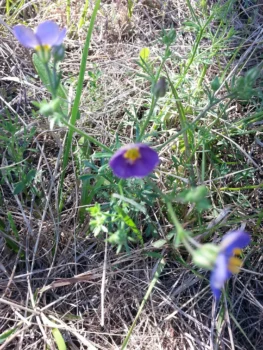
Bluebowls: A Charming Native Wildflower for Southwest Gardens
If you’re looking for a delightful native wildflower that won’t demand constant attention, let me introduce you to bluebowls (Giliastrum rigidulum). This charming little plant might not be the showiest flower in your garden, but it brings a special kind of understated beauty that’s perfectly suited for water-wise landscapes across the Southwest.
What Are Bluebowls?
Bluebowls are native wildflowers belonging to the phlox family, and true to their name, they produce lovely blue flowers arranged in bowl-like clusters. Botanically known as Giliastrum rigidulum, this plant can behave as either an annual or perennial depending on growing conditions. You might also see it listed under its former scientific names, Gilia rigidula.
As a forb (that’s botanist-speak for a non-woody flowering plant), bluebowls stays relatively low to the ground and spreads through underground stems, making it an excellent choice for natural groundcover.
Where Bluebowls Call Home
This native beauty is naturally found in New Mexico and Texas, where it has adapted beautifully to the challenging conditions of the Southwest. As a true native of the lower 48 states, bluebowls has earned its place in the local ecosystem over thousands of years.
- Species observed
- No observations
Why Grow Bluebowls in Your Garden?
There are several compelling reasons to consider adding bluebowls to your landscape:
- Native plant benefits: Supporting local ecosystems and requiring fewer resources than non-native alternatives
- Low maintenance: Once established, these plants are remarkably self-sufficient
- Drought tolerance: Perfect for xeriscaping and water-conscious gardening
- Pollinator support: The blue flowers attract native bees and butterflies
- Unique color: True blue flowers are relatively rare in the wildflower world
Perfect Garden Roles for Bluebowls
Bluebowls shine in several garden settings:
- Rock gardens: Their compact size and drought tolerance make them ideal for rocky, well-drained spots
- Native plant gardens: A perfect addition to any Southwest native plant collection
- Wildflower meadows: Creates beautiful drifts of blue color in naturalized areas
- Xeriscape designs: Excellent choice for water-wise landscaping
- Border edges: Works well as a low-growing border plant
Growing Conditions and Care
One of the best things about bluebowls is how easy they are to please once you understand their preferences:
Sunlight: These plants love full sun and perform best with at least 6-8 hours of direct sunlight daily.
Soil: Well-drained soil is absolutely crucial. Bluebowls can’t tolerate soggy conditions, so ensure good drainage. They’re not particularly fussy about soil fertility – in fact, they often prefer leaner soils.
Water: While they’ll need regular water to get established, mature plants are quite drought tolerant. Deep, infrequent watering works better than frequent shallow watering.
Climate: Best suited for USDA hardiness zones 7-10, which aligns perfectly with their native range.
Planting and Care Tips
Getting started with bluebowls is refreshingly straightforward:
- Timing: Plant in fall or early spring when temperatures are moderate
- Spacing: Allow adequate space between plants for good air circulation
- Establishment: Water regularly for the first few weeks, then gradually reduce frequency
- Fertilizing: Generally unnecessary – these plants are adapted to nutrient-poor soils
- Maintenance: Minimal pruning needed; deadheading can encourage more blooms
Supporting Local Wildlife
By choosing native bluebowls over exotic alternatives, you’re creating habitat for local wildlife. The flowers provide nectar for native pollinators, particularly smaller bee species and butterflies that have co-evolved with this plant. This creates a small but meaningful contribution to local biodiversity.
Is Bluebowls Right for Your Garden?
Bluebowls are an excellent choice if you’re gardening in Texas or New Mexico and want a low-maintenance native plant that supports local ecosystems. They’re particularly well-suited for gardeners who appreciate subtle beauty over flashy displays and those committed to water-wise gardening practices.
However, if you’re looking for a plant that provides year-round structure or dramatic color impact, bluebowls might not be your first choice. Their charm lies in their delicate, naturalistic appearance rather than bold garden presence.
For Southwest gardeners seeking to create sustainable, beautiful landscapes that work with nature rather than against it, bluebowls offer a perfect combination of native authenticity, low maintenance requirements, and gentle beauty that enhances any native plant garden.