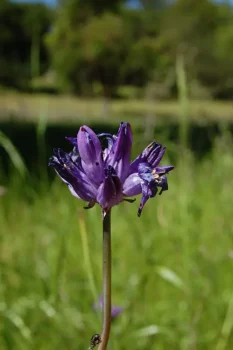
Bluedicks: A Charming Native Bulb for Western Gardens
If you’re looking to add a splash of spring color to your native plant garden, meet bluedicks (Dichelostemma capitatum) – a delightful native bulb that’s been quietly brightening Western landscapes for centuries. Don’t let the quirky common name fool you; this perennial forb is a true gem that deserves a spot in more gardens.
What Makes Bluedicks Special
Bluedicks is a native perennial that grows from underground bulbs, producing clusters of gorgeous purple-blue flowers arranged in dense, rounded heads atop slender stems. As a forb, it’s an herbaceous plant without woody stems, emerging fresh each spring to put on its colorful display before retreating underground for the summer months.
Where Bluedicks Call Home
This beautiful native is right at home across much of the American West, naturally occurring in Arizona, California, Nevada, New Mexico, Oregon, and Utah. It’s perfectly adapted to the region’s Mediterranean and semi-arid climates, making it an excellent choice for gardeners wanting to work with nature rather than against it.
- Species observed
- No observations
Why Plant Bluedicks in Your Garden
There are several compelling reasons to consider adding bluedicks to your landscape:
- Native plant benefits: Supporting local ecosystems and requiring less water and maintenance than non-native alternatives
- Pollinator magnet: The nectar-rich flowers attract bees, butterflies, and other beneficial pollinators during spring blooming season
- Low maintenance: Once established, these hardy bulbs are remarkably drought tolerant and self-sufficient
- Spring interest: Provides beautiful early-season color when many other plants are just waking up
- Naturalized look: Perfect for creating authentic wildflower meadows and naturalized areas
Perfect Garden Settings
Bluedicks thrives in several garden styles and situations:
- Native plant and wildlife gardens
- Xeriscapes and drought-tolerant landscapes
- Wildflower meadows and naturalized areas
- Rock gardens and slopes
- Mixed perennial borders for spring interest
Growing Conditions and Care
One of the best things about bluedicks is how easy it is to grow when you match its natural preferences:
Sunlight: Prefers full sun to partial shade
Soil: Thrives in well-draining soil – heavy clay or waterlogged conditions are its main enemy
Water: Drought tolerant once established, but appreciates some spring moisture during active growth
Climate: Hardy in USDA zones 7-10, perfect for most Western gardens
Planting and Care Tips
Getting bluedicks established in your garden is straightforward:
- When to plant: Plant bulbs in fall for spring blooms
- Planting depth: Plant bulbs about 3-4 inches deep
- Spacing: Space bulbs 3-6 inches apart for natural-looking drifts
- Water wisely: Provide moderate water during spring growth, then allow soil to dry as foliage dies back
- Let it rest: Allow foliage to die back naturally – this feeds the bulb for next year’s show
- Minimal fertilizer: These natives typically don’t need supplemental feeding in appropriate soil
Special Considerations
Bluedicks has a wetland status of Facultative Upland in both the Arid West and Western Mountains regions, meaning it usually grows in non-wetland areas but can occasionally tolerate wetter conditions. This makes it quite adaptable to various garden situations, though it definitely prefers the drier side.
Is Bluedicks Right for Your Garden?
If you’re gardening in the Western United States and want to create a more sustainable, wildlife-friendly landscape, bluedicks is definitely worth considering. It’s particularly perfect for gardeners who want beautiful spring color without the high water requirements of many traditional garden plants. The only gardeners who might want to pass are those in very wet, poorly-draining locations or those outside its natural hardiness range.
With its cheerful spring blooms, pollinator benefits, and low-maintenance nature, bluedicks proves that native plants can be both practical and beautiful. Give this charming Western native a try – your local pollinators will thank you!