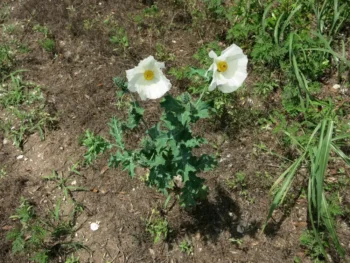
Bluestem Pricklypoppy: A Native Wildflower Worth Discovering
If you’re looking to add some native wildflower charm to your garden, you might want to get acquainted with the bluestem pricklypoppy (Argemone albiflora albiflora). This lesser-known native gem brings delicate white blooms and interesting texture to naturalized landscapes across much of the eastern and central United States.
What is Bluestem Pricklypoppy?
Bluestem pricklypoppy is a native annual or biennial forb that belongs to the poppy family. As a forb, it’s an herbaceous flowering plant without woody stems – think of it as nature’s way of adding soft texture and seasonal color to wild spaces. You might also see it listed under its botanical synonym Argemone alba in some older references.
True to its prickly name, this plant features spiny stems and leaves that give it a distinctive, somewhat architectural appearance even when not in bloom. The bluestem part of its common name refers to the bluish cast that sometimes appears on the stems.
Where Does It Grow Naturally?
This native species has quite an impressive range across the lower 48 states. You’ll find bluestem pricklypoppy growing naturally in Alabama, Connecticut, Florida, Georgia, Illinois, Iowa, Kentucky, Louisiana, Maryland, Massachusetts, Michigan, Mississippi, Missouri, New York, North Carolina, Ohio, South Carolina, Tennessee, and Wisconsin.
- Species observed
- No observations
That’s a pretty extensive native range, stretching from the Southeast up through parts of the Midwest and into New England – showing just how adaptable this species can be to different regional conditions.
Why Consider Growing Bluestem Pricklypoppy?
There are several compelling reasons to include this native wildflower in your landscape:
- Native plant benefits: Supporting local ecosystems by growing plants that evolved in your region
- Low maintenance: As a native species, it’s adapted to local conditions and typically requires minimal care
- Unique texture: The prickly foliage adds interesting architectural elements to wildflower gardens
- White blooms: Delicate poppy-like flowers provide seasonal interest
- Naturalized look: Perfect for creating authentic-looking wild spaces
Garden Design and Landscape Use
Bluestem pricklypoppy works best in naturalized settings rather than formal garden beds. Think prairie-style gardens, wildflower meadows, or natural areas where you want to encourage native plant diversity. Its annual or biennial nature means it may not return in the exact same spot each year, but it can self-seed in favorable conditions.
The plant’s prickly nature makes it less suitable for high-traffic areas or spots where children play frequently. Instead, use it as a backdrop plant or in areas where its unique texture can be appreciated from a distance.
Growing Conditions and Care
While specific growing requirements for this subspecies aren’t well-documented, most Argemone species prefer:
- Full sun: At least 6 hours of direct sunlight daily
- Well-draining soil: Avoid areas that stay consistently wet
- Minimal fertilization: Native plants often perform better without heavy feeding
- Natural rainfall: Once established, supplemental watering is typically unnecessary
Planting and Establishment
Since bluestem pricklypoppy is an annual or biennial, you’ll likely be starting from seed. Here are some general guidelines:
- Direct sow seeds in fall or early spring
- Lightly cover seeds or rake into soil surface
- Be patient – some seeds may not germinate until their second year
- Allow some plants to go to seed if you want natural reseeding
A Note on Availability
Bluestem pricklypoppy isn’t commonly found in typical garden centers, which isn’t surprising given its status as a specialized native wildflower. If you’re interested in growing it, you may need to source seeds from native plant societies, specialized wildflower seed companies, or botanical gardens in your area.
Before planting, make sure you’re getting seeds or plants that are appropriate for your specific region, as there can be genetic variations across this species’ wide range.
The Bottom Line
While bluestem pricklypoppy might not be the showiest wildflower in your native plant toolkit, it offers unique texture and authentic regional character to naturalized landscapes. If you’re working on a prairie restoration, wildflower meadow, or simply want to support native plant diversity in your area, this lesser-known species could be a worthwhile addition to your plant palette.
Just remember to respect its prickly nature when placing it in your landscape, and be patient with establishment – sometimes the most interesting native plants are worth the wait!