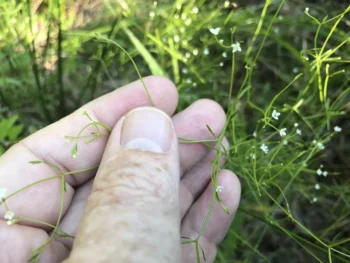
Bluntleaf Bedstraw: A Lesser-Known Native Ground Cover Worth Discovering
If you’re on the hunt for native plants that fly under the radar, bluntleaf bedstraw (Galium obtusum filifolium) might just be the hidden gem your garden has been waiting for. This unassuming perennial forb belongs to the bedstraw family and offers gardeners a chance to support local ecosystems while adding a unique texture to their landscape.
What Is Bluntleaf Bedstraw?
Bluntleaf bedstraw is a native perennial forb, which means it’s an herbaceous plant that lacks woody stems and returns year after year from its root system. As a member of the Galium genus, it shares characteristics with other bedstraws but has its own distinct personality in the garden.
This plant goes by several botanical names in scientific literature, including Galium filifolium and Galium obtusum var. filifolium, reflecting the ongoing botanical discussions about its classification. But don’t let the name confusion deter you – it’s still the same wonderful native plant!
Where Does Bluntleaf Bedstraw Call Home?
This southeastern native has made itself at home across nine states in the eastern United States. You’ll find bluntleaf bedstraw naturally occurring in Alabama, Delaware, Florida, Georgia, Maryland, New Jersey, North Carolina, South Carolina, and Virginia. Its range suggests it’s well-adapted to the climate conditions of the Mid-Atlantic and Southeast regions.
- Species observed
- No observations
Why Consider Bluntleaf Bedstraw for Your Garden?
As a native species, bluntleaf bedstraw offers several compelling reasons to earn a spot in your landscape:
- Supports local ecosystems: Native plants provide food and habitat for indigenous wildlife, insects, and pollinators that have co-evolved with them over thousands of years
- Low maintenance potential: Plants adapted to your local conditions typically require less water, fertilizer, and pest management than non-native alternatives
- Unique garden texture: Bedstraws offer a distinctive fine-textured appearance that can complement bolder garden plants
- Conservation value: Growing native plants helps preserve local plant communities and genetic diversity
Garden Design and Landscape Role
While specific information about bluntleaf bedstraw’s garden performance is limited, bedstraws as a group are often valued for their ability to weave through other plants, creating a naturalistic tapestry effect. They work particularly well in:
- Native plant gardens and natural landscapes
- Woodland edges and partially shaded areas
- Mixed perennial borders where they can scramble among other plants
- Wildlife and pollinator gardens
Growing Conditions and Care
Here’s where we hit a bit of a knowledge gap – specific growing requirements for bluntleaf bedstraw aren’t widely documented in horticultural sources. However, based on its native range and family characteristics, it likely prefers:
- Partial shade to full sun conditions
- Well-draining to moderately moist soils
- USDA hardiness zones that align with its native southeastern range (likely zones 6-9)
If you’re interested in trying this native plant, consider reaching out to native plant societies, botanical gardens, or extension services in the southeastern states where it naturally occurs. They may have more specific growing insights or even seeds or plants available.
The Bottom Line
Bluntleaf bedstraw represents an opportunity to experiment with a truly regional native plant. While it may not be the showiest addition to your garden, it offers the satisfaction of growing something that belongs in your local ecosystem. Just remember that success with any lesser-known native often requires a bit of detective work and patience as you learn its preferences.
If you can’t locate bluntleaf bedstraw or want more reliable alternatives, consider other native bedstraws or ground covers native to your specific region. Your local native plant society can point you toward similar plants with better-documented growing requirements and availability.