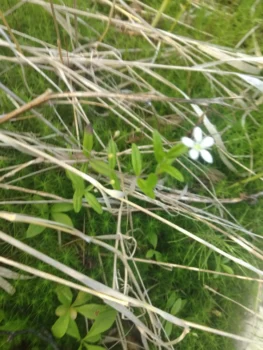
Bluntleaf Sandwort: A Delicate Native Ground Cover for Cool Gardens
If you’re looking for a gentle, unassuming native plant that quietly does its job without making a fuss, bluntleaf sandwort (Moehringia lateriflora) might just be your new garden friend. This charming little perennial forb proves that sometimes the most understated plants can be the most valuable additions to your landscape.
What is Bluntleaf Sandwort?
Bluntleaf sandwort is a native North American perennial that forms low, spreading mats of delicate foliage topped with tiny white flowers. As a forb, it’s an herbaceous plant without woody stems, meaning it dies back to the ground each winter and emerges fresh each spring. Don’t let its modest appearance fool you – this little plant packs a punch when it comes to adaptability and usefulness in the garden.
Where Does It Call Home?
This widespread native has one of the most impressive natural ranges you’ll find. Bluntleaf sandwort grows naturally across an enormous swath of North America, from the chilly reaches of Alaska, Yukon, Northwest Territories, and Nunavut, all the way south through Canada and into most of the lower 48 states. You’ll find it thriving in places as diverse as Colorado’s mountains, Maine’s forests, and everywhere in between.
- Species observed
- No observations
The plant’s extensive native range tells you something important: it’s incredibly adaptable and tough, making it an excellent choice for gardeners across much of North America.
Why Grow Bluntleaf Sandwort?
There are several compelling reasons to consider this native gem for your garden:
- True native plant: Supporting local ecosystems by choosing plants that evolved in your region
- Low maintenance: Once established, it requires minimal care
- Cold hardy: Thrives in USDA hardiness zones 2-7, making it perfect for northern gardens
- Pollinator friendly: Small white flowers attract beneficial insects
- Versatile moisture tolerance: Can handle both wetland and upland conditions depending on your region
Garden Design and Landscape Use
Bluntleaf sandwort shines as a ground cover in naturalized settings. Its low-growing, mat-forming habit makes it perfect for:
- Woodland gardens where it can carpet the forest floor
- Rock gardens where it can soften hard edges
- Shade gardens that need gentle texture
- Native plant gardens focused on local flora
- Areas where you want a wild look rather than formal landscaping
The plant produces small, delicate white flowers that add subtle charm without overwhelming other plants. Think of it as the supporting actor that makes the leading players look even better.
Growing Conditions and Care
One of bluntleaf sandwort’s best features is its adaptability to different moisture conditions. Depending on your region, it can thrive in everything from slightly wet areas to drier upland sites. However, it generally prefers:
- Moist, well-drained soils
- Partial shade to full shade
- Cool conditions (it’s definitely not a heat-lover)
- Areas with good air circulation
The plant’s wetland status varies by region – in some areas it’s more of an upland species, while in others it’s equally happy in wetlands. This flexibility makes it useful for challenging spots in your garden where moisture levels fluctuate.
Planting and Maintenance Tips
Getting bluntleaf sandwort established is generally straightforward:
- Plant in spring or fall when temperatures are cool
- Choose a spot with partial to full shade
- Ensure good drainage while maintaining consistent moisture
- Give it space to spread naturally
- Once established, it typically self-seeds and spreads on its own
This is definitely a set it and forget it kind of plant. After the first season, you can mostly let nature take its course.
Supporting Wildlife
While bluntleaf sandwort may look unassuming, it plays its part in supporting local ecosystems. The small flowers attract various pollinators, particularly smaller insects that might be overlooked by showier blooms. As a native species, it also provides habitat and food sources that local wildlife have evolved to depend upon.
Is Bluntleaf Sandwort Right for Your Garden?
This native charmer is ideal if you:
- Want to support local ecosystems with native plants
- Have shady, moist areas that need ground cover
- Prefer low-maintenance plants
- Garden in zones 2-7
- Appreciate subtle beauty over flashy displays
However, it might not be the best choice if you’re looking for dramatic color, formal garden structure, or plants that thrive in hot, sunny conditions.
Bluntleaf sandwort proves that native plants don’t have to be showy to be valuable. Sometimes the quiet, dependable performers are exactly what your garden needs to create a thriving, low-maintenance landscape that supports local wildlife while providing gentle beauty throughout the growing season.