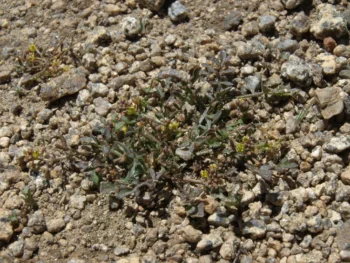
Bluntleaf Yellowcress: A Humble Native for Wetland Gardens
If you’re looking for a showstopper with flashy blooms and Instagram-worthy appeal, bluntleaf yellowcress (Rorippa curvipes) probably isn’t your plant. But if you’re interested in supporting native ecosystems, especially wetland environments, this unassuming little forb might just earn a spot in your garden.
What is Bluntleaf Yellowcress?
Bluntleaf yellowcress is a native North American plant that can live as either an annual or perennial, depending on growing conditions. As a forb, it’s an herbaceous plant without woody stems—think of it as nature’s version of a low-maintenance groundcover that knows how to handle wet feet.
This plant produces small clusters of tiny yellow flowers that, while not particularly eye-catching, serve an important ecological function. Don’t expect dramatic height either—this is a modest plant that prefers to keep things low-key.
Where Does It Call Home?
Bluntleaf yellowcress is impressively widespread across North America. You’ll find it native to Alaska, Canada, and throughout much of the lower 48 states, including Alberta, British Columbia, Alaska, Arizona, Arkansas, California, Colorado, Saskatchewan, Yukon, Idaho, Illinois, Kansas, Michigan, Missouri, Montana, Nebraska, Nevada, New Mexico, North Dakota, Oklahoma, Oregon, South Dakota, Texas, Utah, Washington, and Wyoming. That’s quite a range for such an unassuming plant!
- Species observed
- No observations
The Wetland Specialist
Here’s where bluntleaf yellowcress really shines—it’s a wetland specialist. Across most regions, it has a Facultative Wetland status, meaning it usually hangs out in wetlands but can tolerate drier conditions if needed. In the Great Plains region, it’s even classified as Obligate Wetland, meaning it almost always needs those moist conditions to thrive.
This makes it perfect for:
- Rain gardens and bioswales
- Pond edges and stream banks
- Wetland restoration projects
- Areas with seasonal flooding
- Naturalized low-maintenance landscapes
Growing Bluntleaf Yellowcress
Ideal Growing Conditions
Think wet meadow when planning for bluntleaf yellowcress. It thrives in moist to wet soils and can handle full sun to partial shade. The plant is remarkably adaptable to different soil types as long as moisture levels remain adequate.
Hardiness and Care
With its extensive native range from Alaska to Texas, bluntleaf yellowcress is cold-hardy and can likely grow in USDA zones 2-9. Once established, it requires minimal care—this isn’t a plant that demands weekly attention or special fertilizers.
Planting Tips
The easiest approach is often to let nature do the work. Bluntleaf yellowcress self-seeds readily in favorable conditions, so if you can establish a small population, it may naturally expand over time. Just be aware that in ideal wetland conditions, it can spread, so plan accordingly.
Should You Grow Bluntleaf Yellowcress?
Here’s the honest truth: if you’re looking for a traditional ornamental plant, bluntleaf yellowcress probably isn’t your best choice. But if you’re interested in:
- Supporting native plant communities
- Creating habitat for small pollinators and other wildlife
- Managing wet or seasonally flooded areas
- Participating in wetland restoration efforts
- Low-maintenance native gardening
Then bluntleaf yellowcress could be exactly what you need. It’s one of those quiet champions of the plant world—not flashy, but incredibly valuable for ecosystem health.
The Bottom Line
Bluntleaf yellowcress won’t win any beauty contests, but it’s a hardworking native that fills an important ecological niche. If you have wet areas in your landscape that need plant coverage, or if you’re passionate about supporting native ecosystems, this humble yellowcress deserves consideration. Sometimes the most important garden residents are the ones that work behind the scenes, quietly supporting the bigger picture of biodiversity and ecosystem health.