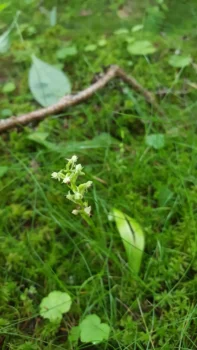
Bluntleaved Orchid: A Delicate Native Beauty for Specialized Gardens
Meet the bluntleaved orchid (Platanthera obtusata), a charming little native that’s equal parts enchanting and enigmatic. This petite perennial orchid might just be one of North America’s best-kept botanical secrets – though there’s a good reason it stays under the radar in most gardening circles.
What Makes the Bluntleaved Orchid Special
The bluntleaved orchid is a delicate forb that lacks significant woody tissue, making it a true herbaceous perennial. What sets this little charmer apart is its distinctive appearance: a single spike of small, white to greenish-white flowers rising 6-12 inches above the ground, accompanied by characteristically blunt-tipped leaves that give the plant its common name.
Where You’ll Find This Native Gem
This orchid is impressively widespread across northern North America, calling Alaska, Canada, and many northern U.S. states home. You’ll find it naturally growing in Alberta, British Columbia, Alaska, Manitoba, New Brunswick, Nova Scotia, Ontario, Colorado, Prince Edward Island, Quebec, Saskatchewan, Yukon, Northwest Territories, Nunavut, Idaho, Maine, Massachusetts, Michigan, Minnesota, Montana, New Hampshire, New York, Oregon, Utah, Vermont, Washington, Wisconsin, Wyoming, Labrador, and Newfoundland.
- Species observed
- No observations
The Wetland Connection
Here’s where things get interesting for garden planning: the bluntleaved orchid has a Facultative Wetland status across all regions where it grows. This means it usually hangs out in wetlands but can occasionally be found in non-wetland areas. Think cool, moist spots with consistent moisture – not your typical backyard flower bed conditions.
Should You Grow Bluntleaved Orchid in Your Garden?
Here’s where we need to have an honest conversation. While this native orchid is absolutely stunning and ecologically valuable, it’s one of the most challenging plants you could attempt to cultivate. Here’s why:
- Specialized soil requirements: Needs cool, moist, acidic soils with specific fungal partnerships
- Mycorrhizal dependency: Requires complex relationships with soil fungi that are nearly impossible to replicate
- Climate specificity: Thrives in USDA hardiness zones 2-6, preferring consistently cool conditions
- Shade lover: Needs partial to full shade environments
Garden Role and Landscape Fit
If you’re determined to try (and have the right conditions), the bluntleaved orchid works best in:
- Specialized woodland gardens
- Bog gardens or constructed wetlands
- Naturalized areas that mimic wild habitats
- Cool, shaded areas with consistent moisture
This isn’t a plant for formal landscapes or low-maintenance gardens. It’s more of a I want to recreate a piece of northern wilderness in my backyard kind of plant.
Pollinator and Wildlife Benefits
Despite its challenging nature, the bluntleaved orchid offers valuable ecological benefits. It attracts specialized pollinators including small moths and flies, contributing to the complex web of native plant-pollinator relationships that keep our ecosystems healthy.
The Bottom Line for Gardeners
While the bluntleaved orchid is undeniably beautiful and ecologically important, it’s honestly best appreciated in its natural habitat rather than in cultivation. The complex growing requirements and mycorrhizal dependencies make successful garden cultivation extremely difficult, even for experienced gardeners.
If you’re lucky enough to have this orchid growing naturally on your property, consider yourself blessed and focus on protecting its habitat. For most gardeners interested in native orchids, consider easier alternatives like wild ginger or native trilliums that can provide woodland beauty without the cultivation challenges.
Sometimes the most loving thing we can do for a plant is to admire it in the wild and leave it where it belongs – thriving in the complex ecosystems it has called home for thousands of years.