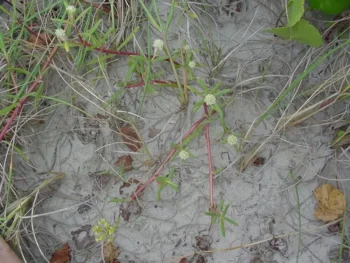
Blutaparon: A Coastal Ground Cover for Salt-Tolerant Gardens
If you’re searching for a tough, low-maintenance ground cover that can handle salty air and sandy soil, blutaparon might just be the unsung hero your coastal garden needs. This hardy perennial has quietly been carpeting shorelines and thriving in challenging conditions where other plants simply give up.
What is Blutaparon?
Blutaparon (pronounced blue-TAP-ah-ron) is a genus of small, succulent-like plants that belong to the amaranth family. These tough little survivors are built for coastal living, with thick, fleshy leaves that help them conserve water and withstand salt spray. Don’t expect showy blooms – blutaparon produces tiny, inconspicuous flowers that pack more function than flash.
Where Does Blutaparon Grow Naturally?
Blutaparon has an interesting native story. It’s naturally found along the coasts of Florida, Louisiana, Texas, Puerto Rico, and the U.S. Virgin Islands. However, it’s also established itself in Hawaii, where it’s considered non-native but has naturalized successfully. The plant typically grows in these coastal and subtropical regions where few other plants can tolerate the harsh conditions.
- Species observed
- No observations
Why Consider Blutaparon for Your Garden?
This little ground cover earns its keep through sheer determination and practicality:
- Salt tolerance: Thrives in coastal conditions where salt spray kills other plants
- Drought resistant: Once established, it needs very little water
- Low maintenance: Virtually care-free once it gets going
- Erosion control: Spreads to form a mat that helps stabilize soil
- Year-round interest: As a perennial, it provides consistent ground coverage
Perfect Garden Settings
Blutaparon shines in specific garden types where its unique strengths matter most:
- Coastal landscapes and seaside gardens
- Xeriscaping and water-wise gardens
- Rock gardens with sandy, well-draining soil
- Areas with poor soil where other ground covers struggle
- Spaces that need erosion control on slopes or dunes
Growing Conditions and Care
Blutaparon is refreshingly undemanding, but it does have some preferences:
Sunlight: Full sun is essential – this plant needs plenty of direct sunlight to thrive.
Soil: Sandy, well-draining soil is ideal. It actually prefers poor soil over rich, organic matter.
Water: Drought tolerant once established. Water regularly during the first growing season, then let nature take over.
Climate: Best suited for USDA hardiness zones 9-11, where it can grow year-round.
Planting and Maintenance Tips
Getting blutaparon established is straightforward:
- Plant in spring after the last frost
- Space plants about 12-18 inches apart for ground cover
- Water regularly the first year, then reduce watering
- No fertilization needed – it actually prefers lean conditions
- Trim back if it spreads beyond desired areas
- Generally pest and disease free
Wildlife and Pollinator Benefits
While blutaparon won’t win any beauty contests, it does offer some wildlife value. The tiny flowers attract small pollinators like bees and beneficial insects. The dense mat it forms can also provide shelter for small creatures in coastal environments.
Should You Plant Blutaparon?
Blutaparon makes sense if you’re gardening in coastal areas within its suitable climate zones and need a virtually indestructible ground cover. It’s particularly valuable for problem areas where salt, sand, and drought make gardening challenging.
However, if you’re gardening outside coastal regions, consider native ground covers that are better suited to your local ecosystem. Native plants will typically provide better wildlife habitat and require fewer resources to maintain.
For coastal gardeners in its native range (Florida, Louisiana, Texas, Puerto Rico, and the U.S. Virgin Islands), blutaparon can be an excellent choice for sustainable, low-maintenance landscaping that works with your local environment rather than against it.