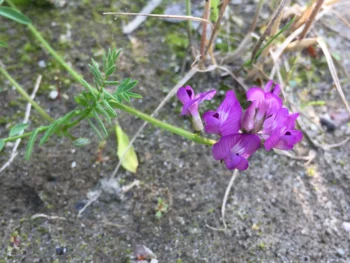
Bodin’s Milkvetch: A Hardy Native Wildflower for Your Garden
If you’re looking for a tough, adaptable native plant that can handle whatever Mother Nature throws at it, let me introduce you to Bodin’s milkvetch (Astragalus bodinii). This unassuming little perennial might not win any flashy flower contests, but it’s got character, resilience, and some pretty impressive credentials when it comes to supporting local ecosystems.
What is Bodin’s Milkvetch?
Bodin’s milkvetch is a native North American perennial that belongs to the legume family. Like its cousins in the pea family, it sports those classic compound leaves and charming little flowers that look like tiny sweet peas. The blooms typically range from purple to pink, creating delicate clusters that dance above the foliage from late spring through summer.
This plant has quite the collection of aliases too – botanists have shuffled it around under names like Astragalus yukonis and Astragalus stragulus over the years. But regardless of what you call it, this little wildflower has been quietly doing its thing across North America for centuries.
Where Does It Call Home?
Talk about a well-traveled plant! Bodin’s milkvetch has one of the most impressive native ranges you’ll find. It naturally occurs across Alaska, throughout much of Canada (including Alberta, Manitoba, Saskatchewan, Yukon, Northwest Territories, and Newfoundland), and stretches down into the western United States including Colorado, Idaho, Nebraska, New Mexico, Utah, and Wyoming.
- Species observed
- No observations
This extensive range tells us something important: this plant is incredibly adaptable and can handle a wide variety of growing conditions.
Why Plant Bodin’s Milkvetch?
Here are some compelling reasons to consider adding this native gem to your garden:
- True native status: It’s genuinely native across a huge swath of North America, so you’re supporting local ecosystems
- Pollinator magnet: Those pea-like flowers are irresistible to native bees, butterflies, and other beneficial insects
- Adaptable nature: Its wetland status varies from Facultative to Facultative Wetland depending on region, meaning it can handle both moist and drier conditions
- Low maintenance: As a perennial, it comes back year after year with minimal fuss
- Erosion control: Great for naturalizing slopes and areas where you need some ground-hugging stability
Perfect Garden Settings
Bodin’s milkvetch shines in:
- Native plant gardens and prairie restorations
- Wildflower meadows and naturalized areas
- Xeriscaping projects (once established, it’s quite drought-tolerant)
- Slopes needing erosion control
- Pollinator gardens focused on supporting native species
Growing Conditions and Care
One of the best things about native plants like Bodin’s milkvetch is that they’re already adapted to local conditions. Based on its natural range and wetland ratings, this plant appears to be quite flexible:
- Hardiness: Extremely cold hardy (likely USDA zones 3-7, given its Alaska origins)
- Moisture: Adaptable to various moisture levels, from moderately wet to dry conditions
- Soil: Likely prefers well-draining soil but can adapt to different types
- Sun exposure: Probably does best in full sun to partial shade
Planting and Establishment Tips
Like many members of the legume family, Bodin’s milkvetch can be a bit particular about getting started, but once established, it’s remarkably tough:
- Seeds may benefit from scarification (lightly scratching the seed coat) to improve germination
- Plant in spring after the last frost or in fall for spring germination
- Give plants space to spread naturally – they’ll likely form small colonies over time
- Water regularly during establishment, then reduce watering as the plant matures
- Avoid over-fertilizing – legumes can fix their own nitrogen and too much fertility can actually reduce flowering
The Bottom Line
Bodin’s milkvetch might not be the showiest plant in your garden, but it’s definitely one of the most reliable and ecologically valuable. If you’re working on a native plant garden, trying to support local pollinators, or just want a tough perennial that can handle your local climate (especially if you’re anywhere in its extensive native range), this little milkvetch deserves serious consideration.
Plus, there’s something deeply satisfying about growing a plant that’s been thriving in your area for thousands of years. It’s like welcoming an old friend back to the neighborhood – one that happens to feed the bees and butterflies while asking for very little in return.