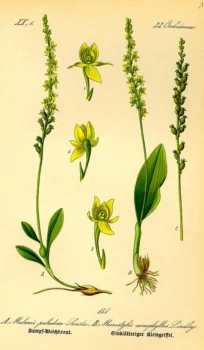
Bog Adder’s-Mouth Orchid: A Tiny Treasure for Wetland Gardens
Meet one of North America’s most unassuming native orchids – the bog adder’s-mouth orchid (Malaxis paludosa). Don’t let its modest appearance fool you; this little perennial packs a lot of character into its petite frame and offers a unique opportunity for adventurous gardeners looking to create specialized wetland habitats.
What Is the Bog Adder’s-Mouth Orchid?
The bog adder’s-mouth orchid is a small, perennial forb that belongs to the orchid family. Unlike its showier orchid cousins, this diminutive beauty reaches only 2-8 inches tall and produces tiny, greenish-yellow flowers arranged on a delicate spike. As a forb, it lacks significant woody tissue and maintains its perennating buds at or below ground level, allowing it to return year after year in suitable conditions.
You might also encounter this plant listed under its synonym, Hammarbya paludosa, in older botanical references.
Where Does It Call Home?
This hardy little orchid is truly a child of the North. As a native species to Alaska, Canada, and the northern lower 48 states, it thrives in some pretty chilly locations. You’ll find natural populations scattered across Alaska, Alberta, British Columbia, Manitoba, Ontario, Saskatchewan, Yukon, Northwest Territories, and Minnesota.
- Species observed
- No observations
The bog adder’s-mouth orchid is a true wetland specialist, classified as an Obligate Wetland plant across all regions where it grows. This means you’ll almost always find it in wetland environments – it’s simply not happy anywhere else!
Should You Grow Bog Adder’s-Mouth Orchid?
Here’s where we need to have an honest conversation. While this native orchid is absolutely fascinating and would make an incredible addition to the right garden, it’s not for the faint of heart or the casual gardener. Here’s why you might (or might not) want to tackle this challenge:
Reasons to Consider It:
- You’re creating a bog garden or wetland restoration project
- You’re an orchid enthusiast looking for a unique native species
- You want to support native plant biodiversity in appropriate habitats
- You enjoy the challenge of growing specialized plants
- You have consistently wet, acidic soil conditions
Reasons to Think Twice:
- It requires very specific growing conditions that are hard to replicate
- The flowers are tiny and not particularly showy
- It’s extremely difficult to establish and maintain
- It needs cool temperatures and may not thrive in warmer climates
- Sourcing plants responsibly can be challenging
Growing Conditions and Care
If you’re still determined to give this little orchid a try, here’s what you need to know about keeping it happy:
Essential Growing Requirements:
- Moisture: Consistently wet to moist soil – think bog conditions
- Soil: Acidic, organic-rich soil, ideally with sphagnum moss
- Light: Partial shade to filtered sunlight
- Temperature: Cool conditions; thrives in USDA zones 2-6
- Drainage: Paradoxically needs both constant moisture and good drainage to prevent stagnation
Planting and Care Tips:
Successfully growing bog adder’s-mouth orchid requires creating a specialized environment:
- Consider growing it in a dedicated bog garden with other wetland plants
- Use a mix of peat moss, sphagnum moss, and perlite for container growing
- Maintain consistent moisture without waterlogging
- Provide protection from harsh afternoon sun
- Be patient – orchids can be slow to establish and may take years to bloom
- Avoid fertilizers, as bog plants prefer nutrient-poor conditions
Garden Design and Landscape Role
The bog adder’s-mouth orchid isn’t going to be your garden’s showstopper, but it can play an important supporting role in the right setting. Consider it as:
- A conversation starter in specialized bog gardens
- Part of a native wetland restoration project
- A unique addition to orchid collections
- An educational specimen for demonstrating native plant diversity
- A component in rain gardens or water features with bog-like conditions
The Bottom Line
The bog adder’s-mouth orchid is definitely not your typical garden center purchase. It’s a specialized native plant that requires specific conditions and a patient gardener. If you have the right environment and the determination to create suitable bog conditions, this little orchid can be a rewarding addition to your wetland garden.
However, if you’re looking for easier native alternatives that still support wetland ecosystems, consider other bog-loving natives like wild calla, marsh marigold, or native sedges. These plants will give you the wetland garden aesthetic with much better chances of success.
Remember, when sourcing any native plants, especially specialized ones like orchids, always purchase from reputable nurseries that propagate their plants rather than wild-collecting them. This helps protect wild populations while still allowing you to enjoy these botanical treasures in your own garden.