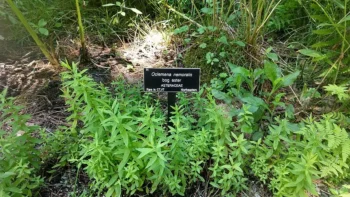
Bog Aster: A Late-Blooming Native Gem for Wet Gardens
If you’re looking for a native wildflower that thrives where other plants fear to tread – namely, in those soggy spots of your yard – let me introduce you to bog aster (Oclemena nemoralis). This unassuming perennial might not win any flashy flower contests, but it’s exactly what your wet garden needs for late-season color and pollinator support.
What Is Bog Aster?
Bog aster is a native North American perennial that belongs to the aster family. You might also see it listed under its former scientific name, Aster nemoralis, but don’t let the name change confuse you – it’s the same reliable wetland wildflower. As an herbaceous forb, bog aster dies back to the ground each winter and returns faithfully each spring, gradually spreading to form colonies in suitable conditions.
Where Does It Naturally Grow?
This native beauty has quite an impressive range across eastern North America. You’ll find bog aster naturally growing from the Canadian provinces of New Brunswick, Nova Scotia, Ontario, Prince Edward Island, Quebec, Newfoundland, and Labrador, down through much of the northeastern and mid-Atlantic United States. Its native range includes Connecticut, Delaware, Maine, Maryland, Massachusetts, Michigan, New Hampshire, New Jersey, New York, Pennsylvania, Rhode Island, and Vermont.
- Species observed
- No observations
Why Plant Bog Aster in Your Garden?
Here’s where bog aster really shines – it’s practically tailor-made for those challenging wet spots in your landscape. With its obligate to facultative wetland status, this plant actually wants to grow where the soil stays moist to wet. Instead of fighting against your yard’s natural drainage patterns, bog aster works with them.
The real magic happens in late summer and fall when bog aster produces clusters of small, daisy-like flowers. These blooms provide crucial late-season nectar when many other flowers have called it quits for the year. Bees, butterflies, and other pollinators absolutely depend on plants like bog aster to fuel up before winter.
Perfect Garden Situations
Bog aster is your go-to plant for:
- Rain gardens and bioswales
- Bog gardens and wetland margins
- Naturalized woodland edges
- Areas with poor drainage
- Native plant gardens focusing on late-season interest
- Pollinator gardens that need wet-tolerant options
Growing Conditions and Care
The beauty of bog aster lies in its simplicity. This native thrives in USDA hardiness zones 3-8, making it suitable for most northern and temperate climates. It prefers moist to wet soils and can handle everything from full sun to partial shade, though it tends to be more compact in sunnier spots.
Bog aster isn’t picky about soil type, but it does appreciate consistently moist conditions and slightly acidic soil. Once established, it’s remarkably low-maintenance – no need for fertilizing or frequent watering (assuming you’ve planted it in an appropriately moist location).
Planting and Establishment Tips
Spring is the ideal time to plant bog aster, giving it a full growing season to establish before its first winter. Since it spreads by underground rhizomes, give each plant enough space to naturalize – about 12-18 inches apart is usually sufficient.
Here are some key tips for success:
- Choose locations that stay consistently moist
- Don’t worry about soil amendments – bog aster adapts to most soil types
- Mulch lightly to retain moisture and suppress weeds
- Be patient – it may take a year or two to really take off
- Allow it to self-seed for natural colonies
Is Bog Aster Right for Your Garden?
Bog aster might not be the showiest flower in your garden, but it’s definitely one of the most useful. If you have wet areas where other plants struggle, or if you’re committed to supporting late-season pollinators, this native wildflower deserves serious consideration. Its subtle beauty and ecological benefits make it a valuable addition to any naturalistic landscape design.
Just remember – bog aster is happiest when its feet are wet, so don’t try to force it into dry, well-drained areas where it won’t thrive. Give it the moist conditions it craves, and you’ll be rewarded with years of reliable late-season blooms and happy pollinators.