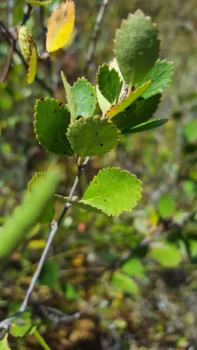
Bog Birch: A Hardy Native Shrub for Wet Spots in Your Garden
If you’ve got a soggy spot in your yard that seems impossible to plant, meet your new best friend: bog birch (Betula pumila var. glandulifera). This tough little native shrub thrives where other plants fear to tread, turning your garden’s wettest challenges into beautiful, functional landscapes.
What Makes Bog Birch Special?
Bog birch is a perennial shrub that typically stays under 13-16 feet tall, making it perfect for smaller spaces. This multi-stemmed beauty belongs to the birch family and goes by several scientific aliases, including Betula glandulifera and Betula glandulosa var. glandulifera, but don’t let all those names intimidate you – it’s simply a wonderful native plant that deserves more attention.
Where Bog Birch Calls Home
This hardy shrub is native to both Canada and the United States, with an impressive range that spans from coast to coast. You’ll find bog birch growing naturally in Alberta, British Columbia, Manitoba, Ontario, Quebec, Saskatchewan, Yukon, and the Northwest Territories. In the U.S., it grows in California, Idaho, Illinois, Indiana, Iowa, Kansas, Michigan, Minnesota, Montana, New York, North Dakota, Oregon, Vermont, Washington, and Wisconsin.
- Species observed
- No observations
Why Your Garden Needs Bog Birch
Bog birch isn’t just another pretty face – it’s a problem-solver. Here’s why gardeners are falling in love with this native gem:
- Perfect for rain gardens and naturally wet areas where other shrubs struggle
- Provides early spring interest with attractive catkins
- Offers lovely yellow fall color to brighten autumn landscapes
- Creates valuable wildlife habitat for birds and beneficial insects
- Helps prevent erosion in wet, sloped areas
- Requires minimal maintenance once established
Growing Bog Birch Successfully
The secret to bog birch success? Give it what it craves: moisture and room to spread. This shrub thrives in USDA hardiness zones 2-6, making it incredibly cold-tolerant for northern gardeners.
Perfect Growing Conditions
- Soil: Moist to wet, acidic soils are ideal
- Light: Full sun to partial shade
- Water: Consistently moist conditions; tolerates seasonal flooding
- Space: Allow room for multiple stems and natural spreading habit
Planting and Care Tips
Getting bog birch established is refreshingly straightforward:
- Plant in spring or early fall for best establishment
- Dig a hole as deep as the root ball and twice as wide
- Keep soil consistently moist, especially during the first growing season
- Mulch around the base to retain moisture and suppress weeds
- Pruning is rarely necessary – just remove dead or damaged branches
- No fertilizer needed in most cases; bog birch adapts to nutrient-poor soils
Perfect Garden Partners
Bog birch shines in naturalized settings and specialized garden types. Consider it for:
- Rain gardens and bioswales
- Bog or wetland gardens
- Native plant landscapes
- Streamside plantings
- Wildlife habitat gardens
The Bottom Line
If you’re looking for a low-maintenance native shrub that can handle your garden’s wettest spots while providing year-round interest and wildlife value, bog birch deserves serious consideration. It’s not the showiest plant in the garden center, but it’s exactly the kind of reliable, hardworking native that forms the backbone of sustainable landscapes. Plus, there’s something deeply satisfying about working with nature instead of against it – and bog birch makes that partnership beautifully easy.