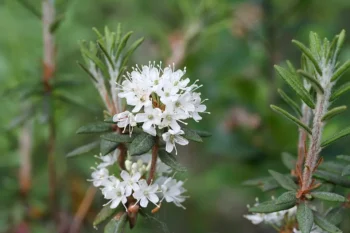
Bog Labrador Tea: A Hardy Native Shrub for Wetland Gardens
If you’re looking to add a tough, low-maintenance native shrub to your wetland garden or bog area, bog Labrador tea (Ledum groenlandicum) might be exactly what you need. This unassuming evergreen shrub has been quietly thriving in North America’s wetlands for thousands of years, and it’s ready to bring that same resilience to your landscape.
What Is Bog Labrador Tea?
Bog Labrador tea is a perennial shrub that belongs to the heath family. You might also see it listed under its synonyms Rhododendron groenlandicum or various Ledum palustre subspecies – botanists have been busy reclassifying this plant over the years! This slow-growing shrub typically reaches about 3 feet tall and wide at maturity, making it a perfect fit for smaller gardens or as part of a larger wetland planting.
The plant’s gray-green foliage provides year-round interest, and in late spring, it produces clusters of small white flowers that, while not particularly showy, add a delicate touch to the landscape. What really sets this shrub apart is its incredible cold hardiness and its ability to thrive in consistently wet conditions that would kill many other plants.
Where Is It Native?
Bog Labrador tea has an impressively wide native range across northern North America. You’ll find it naturally occurring from Alaska and northern Canada all the way down to states like Minnesota, Michigan, Maine, and even parts of New Jersey and Pennsylvania. It also calls Greenland and St. Pierre and Miquelon home, showing just how well-adapted it is to cold, wet climates.
- Species observed
- No observations
Important Conservation Note
Before you rush out to buy bog Labrador tea, there’s something important to know: this plant is listed as endangered in New Jersey, with a rarity status of S1 (critically imperiled). If you’re interested in growing this native beauty, please make sure you purchase from reputable nurseries that use responsibly sourced, nursery-propagated material rather than wild-collected plants.
Why Grow Bog Labrador Tea?
Here are some compelling reasons to consider this native shrub:
- Wetland specialist: Perfect for rain gardens, bog gardens, or naturally wet areas where other plants struggle
- Incredibly hardy: Survives temperatures down to -33°F, making it suitable for USDA zones 2-6
- Low maintenance: Once established, it requires minimal care
- Pollinator support: The white flowers attract bees and other beneficial insects
- Year-round interest: Evergreen foliage provides structure in winter landscapes
- Native plant benefits: Supports local ecosystems and wildlife
Growing Conditions and Care
Bog Labrador tea is pretty specific about its growing conditions, but if you can meet its needs, it’s remarkably easy to care for:
Soil: This plant absolutely must have consistently moist to wet, acidic soil (pH 5.0-7.0). It’s classified as an obligate wetland plant in most regions, meaning it almost always occurs in wetlands. Fine to medium-textured soils work best.
Water: Think bog conditions – consistently moist to wet soil is essential. This isn’t a plant for dry gardens or areas that experience drought.
Light: Bog Labrador tea tolerates intermediate shade, making it useful in partially shaded wetland areas.
Climate: Extremely cold hardy but needs at least 95 frost-free days. It can handle precipitation ranging from 12 to 50 inches annually.
Planting and Establishment
When planting bog Labrador tea:
- Choose a consistently wet location – this is non-negotiable
- Plant in spring for best establishment
- Space plants 3-6 feet apart (you can plant 1,700-4,800 per acre for larger installations)
- Be patient – this is a slow-growing plant that may only reach 2 feet after 20 years
- Minimal root depth (18 inches) makes it suitable for areas with shallow soil over hardpan
Landscape Uses
Bog Labrador tea shines in specialized garden settings:
- Bog gardens: Perfect centerpiece for constructed bog environments
- Rain gardens: Excellent for managing stormwater runoff
- Wetland restoration: Great choice for restoring degraded wetland areas
- Naturalized landscapes: Fits beautifully into wild, naturalistic designs
- Winter interest: Provides structure and color when other plants are dormant
Propagation
If you want to grow more bog Labrador tea, you have several options. Seeds are routinely available commercially and can be sown in spring or summer. The plant can also be propagated through bare root divisions or container plants. However, remember that this is a slow spreader – it doesn’t spread vegetatively, so each plant pretty much stays put where you plant it.
Is Bog Labrador Tea Right for Your Garden?
This native shrub is perfect for you if you have consistently wet, acidic conditions and want a low-maintenance, cold-hardy plant that supports local wildlife. It’s not the right choice if you’re looking for showy flowers or fast growth, and it definitely won’t work in dry or alkaline conditions.
If you have a wet spot in your yard that’s been challenging to plant, or if you’re creating a rain garden or bog garden, bog Labrador tea could be exactly what you need. Just remember to source it responsibly and be patient with its slow but steady growth. Sometimes the best things in the garden are worth waiting for!