Bog Muhly: The Perfect Native Grass for Your Wetland Garden
If you’ve been searching for a native grass that thrives in those perpetually soggy spots in your yard, meet bog muhly (Muhlenbergia uniflora)! This unassuming little perennial grass might not win any beauty contests, but it’s absolutely perfect for specialized wetland gardening situations where other plants fear to tread.
What Is Bog Muhly?
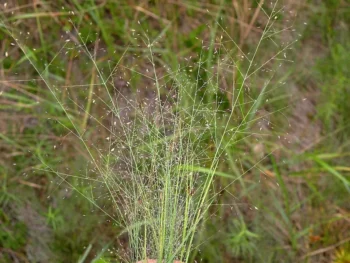
Bog muhly is a native North American perennial grass that belongs to the bunch grass family. Growing to a modest height of about 1.2 feet, this semi-erect grass forms small clumps rather than spreading aggressively. Its fine-textured, medium-green foliage creates a delicate appearance that complements other wetland plants beautifully.
The plant produces small, inconspicuous yellow flowers in mid-summer, followed by yellow seeds from summer through fall. While the blooms won’t stop traffic, they serve their purpose in the plant’s reproductive cycle and add subtle interest to wetland plantings.
Where Does Bog Muhly Grow Naturally?
This remarkable grass has an impressive native range across eastern North America. You’ll find bog muhly growing naturally in British Columbia, New Brunswick, Nova Scotia, Ontario, Quebec, Labrador, Newfoundland, and throughout much of the northeastern United States including Connecticut, Maine, Maryland, Massachusetts, Michigan, Minnesota, New Hampshire, New Jersey, New York, Pennsylvania, Rhode Island, Vermont, and Wisconsin. It even extends west to Oregon!
- Species observed
- No observations
Why Choose Bog Muhly for Your Garden?
Here’s where bog muhly really shines – it’s classified as an Obligate Wetland plant across all regions where it grows. This means it almost always occurs in wetlands and has adapted specifically to thrive in consistently wet conditions. If you have a spot in your yard that stays soggy year-round, bog muhly could be your new best friend.
Perfect for:
- Bog gardens and wetland restorations
- Rain gardens and bioswales
- Pond edges and stream banks
- Naturalized wet meadow areas
- Areas with poor drainage
Growing Conditions and Care
Bog muhly has some very specific preferences, but if you can meet them, it’s relatively easy to grow:
Soil Requirements:
- Thrives in fine to medium-textured soils
- Requires consistently moist to wet conditions (high moisture use)
- Prefers acidic soils (pH 4.8-6.8)
- Cannot tolerate drought conditions
Light and Climate:
- Needs full sun (shade intolerant)
- Hardy in zones with minimum temperatures down to -33°F
- Requires at least 100 frost-free days
- Thrives in areas receiving 35-60 inches of annual precipitation
Planting and Establishment
The most straightforward way to establish bog muhly is through seed, as it’s rarely available commercially as plants. With approximately 750,000 seeds per pound, a little goes a long way! Seeds can be direct sown in appropriate wetland conditions.
Keep in mind that bog muhly has a moderate growth rate and medium seedling vigor, so patience is key during establishment. The plant has a relatively short lifespan compared to some perennials, but it will self-seed moderately in suitable conditions.
Maintenance and Long-term Care
Once established, bog muhly is refreshingly low-maintenance:
- No fertilizer needed (medium fertility requirement)
- Cannot be mowed or cut back regularly
- Doesn’t resprout after cutting
- Has high fire tolerance if needed for wetland management
- Active growing period is spring and summer
Wildlife and Ecosystem Benefits
As a native wetland grass, bog muhly provides important habitat structure in wetland ecosystems. While it may not be a major pollinator magnet due to its wind-pollinated flowers, it serves as part of the complex web of native plants that support healthy wetland wildlife communities.
Is Bog Muhly Right for You?
Bog muhly isn’t for everyone – and that’s perfectly okay! This specialized native grass is ideal if you have:
- Consistently wet or boggy areas that need native plant coverage
- A wetland restoration or rain garden project
- Interest in supporting native plant communities
- Patience for slower-growing, specialized plants
However, if you’re looking for a drought-tolerant grass or something for dry, well-drained areas, bog muhly definitely isn’t your plant. Its obligate wetland status means it simply cannot survive without consistent moisture.
For gardeners with the right wet conditions, bog muhly offers a chance to work with nature rather than against it, creating authentic native plant communities that support local ecosystems while solving challenging wet-site gardening problems.