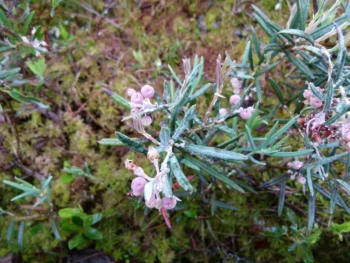
Bog Rosemary: A Charming Native Shrub for Wet Gardens
If you’ve been dreaming of creating a bog garden or need a beautiful native plant for that persistently soggy spot in your yard, bog rosemary (Andromeda polifolia) might just be your new best friend. This delightful little evergreen shrub proves that wet doesn’t have to mean weedy – it can mean wonderfully wild and beautiful too!
What Makes Bog Rosemary Special?
Bog rosemary is a true native treasure, naturally occurring across a vast range from Alaska and Canada down through many northern U.S. states including Connecticut, Maine, Massachusetts, Michigan, Minnesota, and Wisconsin, among others. As a perennial shrub, this hardy little plant typically stays under 4-5 feet tall, though it usually remains much more compact in garden settings.
What really sets bog rosemary apart is its elegant simplicity. The narrow, leathery dark green leaves have silvery-white undersides that create a lovely two-toned effect when the wind stirs the foliage. In late spring to early summer, clusters of small, bell-shaped flowers in soft pink or white dance above the leaves like tiny lanterns.
- Species observed
- No observations
Why Choose Bog Rosemary for Your Garden?
Here’s where bog rosemary really shines – it absolutely loves what most plants hate: wet feet! This plant thrives in conditions that would make other shrubs throw in the trowel:
- Wetland Champion: Classified as obligate wetland in most regions, meaning it almost always occurs naturally in wetlands
- Native Plant Benefits: Supports local ecosystems and provides habitat for native wildlife
- Pollinator Friendly: Those charming little flowers attract bees, butterflies, and other beneficial insects
- Low Maintenance: Once established, it pretty much takes care of itself
- Year-Round Interest: Evergreen foliage provides structure and color even in winter
Perfect Garden Situations
Bog rosemary isn’t for every garden, but in the right spot, it’s absolutely perfect:
- Bog gardens and constructed wetlands
- Rain gardens and bioswales
- Consistently moist woodland edges
- Native plant gardens with wet areas
- Natural areas that need gentle management
Growing Conditions and Care
The secret to success with bog rosemary is understanding what it craves: think cool, moist, and acidic. Here’s what this little beauty needs:
Soil: Acidic soil with a pH between 4.5-6.0 is essential. The soil should be consistently moist to wet but not completely stagnant.
Light: Full sun to partial shade works well, though it tends to flower best with at least some direct sunlight.
Hardiness: Extremely cold tolerant (USDA zones 2-6), this plant laughs at harsh winters.
Water: Keep it consistently moist – this is not a plant that appreciates drying out.
Planting and Care Tips
Getting bog rosemary established is refreshingly straightforward:
- Timing: Plant in spring after the last frost for best establishment
- Soil Prep: If your soil isn’t naturally acidic, amend with peat moss or sulfur
- Mulching: Use acidic mulch like pine needles or oak leaves
- Fertilizing: Skip it! Bog rosemary prefers nutrient-poor conditions
- Pruning: Minimal pruning needed – just remove any dead or damaged growth
- Patience: Like many native plants, it may take a season or two to fully establish
Is Bog Rosemary Right for Your Garden?
Bog rosemary is definitely a specialist plant. If you have consistently dry, alkaline, or well-draining soil, this probably isn’t your plant. But if you have a wet, acidic spot that other plants struggle in, or if you’re creating a bog garden or rain garden, bog rosemary could be exactly what you’re looking for.
This charming native shrub offers the perfect combination of ecological value and quiet beauty. It won’t wow you with flashy blooms or dramatic foliage, but it will provide steady, elegant presence while supporting local pollinators and wildlife. Sometimes the most rewarding garden plants are the ones that simply belong – and bog rosemary definitely belongs in the right wet, wild spaces.
Ready to embrace the bog life? Your local native plant society or specialty nursery can help you source bog rosemary and create the perfect wetland garden conditions for this delightful little shrub to call home.