Bog White Violet: A Delicate Native Gem for Your Wetland Garden
If you’ve ever wandered through a marshy area in spring and spotted tiny white flowers peeking up from lance-shaped leaves, you’ve likely encountered the charming bog white violet (Viola lanceolata). This unassuming native perennial might be small in stature, but it packs a big punch when it comes to ecological value and garden versatility.
Meet the Bog White Violet
The bog white violet is a true North American native, naturally occurring across an impressive range that spans from Canada down to the Gulf Coast states. You’ll find this adaptable little plant thriving in Alabama, Arkansas, California, Connecticut, Delaware, Florida, Georgia, and many other states across the eastern and central United States, as well as several Canadian provinces including British Columbia, New Brunswick, Nova Scotia, Ontario, Prince Edward Island, and Quebec.
- Species observed
- No observations
As a perennial forb—that’s gardening speak for a non-woody plant that comes back year after year—the bog white violet forms low-growing colonies that spread gently through underground runners. Don’t worry about it taking over your garden; this well-behaved native knows its place and won’t become aggressive.
Why You’ll Love This Little Beauty
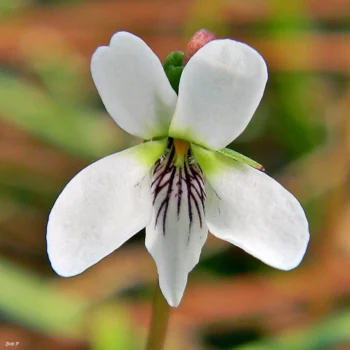
The bog white violet may be petite, but its charm is undeniable. In spring, it produces delicate white flowers adorned with subtle purple veining that adds just the right amount of visual interest. The lance-shaped leaves (hence the lanceolata in its scientific name) create an attractive groundcover that looks tidy without being formal.
But here’s where this plant really shines: it’s an ecological powerhouse. Those modest flowers attract a variety of small pollinators, including bees and butterflies. Even better, bog white violets serve as host plants for fritillary butterfly caterpillars, making them an essential part of the native ecosystem food web.
The Perfect Spots for Bog White Violets
True to its name, the bog white violet absolutely loves wet feet. This plant holds Obligate Wetland status across all regions where it grows, meaning it almost always occurs in wetland conditions. This makes it perfect for:
- Rain gardens and bioswales
- Bog gardens and wetland restoration projects
- Areas with poor drainage that challenge other plants
- Naturalized spaces along streams or pond edges
- Low-lying areas of your yard that stay consistently moist
Hardy in USDA zones 3-9, this adaptable native can handle both northern winters and southern heat, as long as it has access to consistent moisture.
Growing Your Bog White Violets Successfully
The secret to success with bog white violets is simple: keep them wet! These plants thrive in full sun to partial shade, but moisture is non-negotiable. They prefer acidic to neutral soils and will flourish in areas that would be too soggy for most other garden plants.
Once established, bog white violets are remarkably low-maintenance. They’ll spread naturally through runners, creating a gentle groundcover over time. In hot climates, don’t be surprised if they go dormant during the summer heat—this is perfectly normal, and they’ll bounce back when cooler, wetter conditions return.
For planting, spring or fall are ideal times. Space plants about 6-12 inches apart if you want quicker coverage, though they’ll eventually fill in on their own. Water regularly during the first growing season to help them establish, then let nature take over.
A Native Choice That Makes Sense
In a world where many gardeners are moving toward native plants for their ecological benefits and lower maintenance requirements, the bog white violet checks all the boxes. It provides habitat for wildlife, requires no fertilizers or pesticides once established, and solves the common problem of what to plant in those persistently wet spots in your landscape.
Whether you’re creating a dedicated rain garden, restoring a wetland area, or simply looking for an attractive groundcover for a challenging wet spot, the bog white violet deserves serious consideration. This humble native proves that sometimes the best garden solutions are the ones that have been growing in our neighborhoods all along.