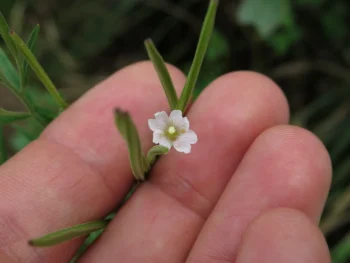
Bog Willowherb: A Delicate Native for Your Wetland Garden
If you’ve been searching for a native plant that thrives in those perpetually soggy spots in your yard, bog willowherb (Epilobium leptophyllum) might just be your new best friend. This unassuming perennial may not win any flashy flower contests, but it’s a reliable performer in wet conditions where many other plants would simply give up and float away.
What Exactly Is Bog Willowherb?
Bog willowherb is a native North American perennial forb that belongs to the evening primrose family. Don’t let the name fool you – while it’s called willowherb, it’s not related to willows at all. The name comes from its narrow, willow-like leaves that give it a delicate, almost grassy appearance.
This plant goes by several scientific synonyms, including Epilobium nesophilum and Epilobium rosmarinifolium, which might explain why you’ve had trouble tracking down information about it. Like many wetland specialists, it’s a bit of a wallflower in the gardening world.
Where Does It Call Home?
Bog willowherb is impressively widespread across North America. You’ll find this adaptable native growing from Alaska down through Canada and across most of the United States, including:
- All Canadian provinces and territories
- Most U.S. states from coast to coast
- From the cold reaches of Alaska to the warmer climates of North Carolina and California
- Species observed
- No observations
However, if you’re gardening in New Jersey, take note: bog willowherb has a rarity status of S2 (imperiled) in that state. If you’re in the Garden State and want to grow this plant, make sure you source it responsibly from reputable native plant nurseries rather than wild-collecting.
What Does It Look Like?
Bog willowherb won’t stop traffic with its looks, but it has a quiet charm. This slow-growing perennial reaches about 3.6 feet tall when mature, sporting a single-stem, erect growth habit. The narrow, medium-textured green foliage gives it an airy appearance, and in summer, it produces small red to pink flowers that are more cute than showy.
The plant has a moderate lifespan and grows slowly, so don’t expect instant gratification. Think of it as the steady, reliable friend rather than the life of the party.
Why Would You Want to Grow It?
Here’s where bog willowherb really shines – it’s a wetland specialist that actually enjoys having wet feet. In most regions, it’s classified as an obligate wetland plant, meaning it almost always occurs in wetlands. This makes it perfect for:
- Bog gardens and rain gardens
- Pond margins and stream banks
- Wetland restoration projects
- Areas with poor drainage where other plants struggle
- Native plant gardens focused on authentic local ecosystems
The small flowers attract various pollinators, including native bees and other beneficial insects, adding ecological value to your landscape. It’s hardy in USDA zones 2-8, making it suitable for most North American gardens.
Growing Conditions: Give It What It Craves
Bog willowherb has some specific preferences, but once you understand them, it’s quite easy to please:
Soil: Prefers fine to medium-textured soils and has a high tolerance for anaerobic (oxygen-poor) conditions. It’s not picky about fertility, actually preferring low-fertility soils.
Moisture: This is the big one – it needs consistently moist to wet conditions. Drought tolerance? Practically non-existent. If you don’t have a naturally wet area, this probably isn’t the plant for you.
pH: Prefers acidic conditions, thriving in soil with a pH between 4.0 and 6.5.
Light: Tolerates intermediate shade, so it doesn’t need full sun to be happy.
Temperature: Extremely cold hardy, tolerating temperatures as low as -33°F.
Planting and Care Tips
Growing bog willowherb successfully is more about choosing the right location than intensive care:
- Start from seed: With about 3 million seeds per pound, propagation by seed is your best bet. Commercial availability is limited, so you may need to source seeds from specialty native plant suppliers.
- Plant in spring: This is the active growth period for bog willowherb.
- Ensure consistent moisture: Never let the soil dry out – this plant’s high moisture use means it needs that steady water supply.
- Minimal fertilization: With low fertility requirements, it actually prefers lean soils.
- Be patient: With slow growth and slow seed spread, this isn’t a plant for impatient gardeners.
Spacing: Plant 3,450 to 10,912 plants per acre if you’re doing a large restoration project, which translates to roughly 1-3 feet apart for smaller gardens.
The Bottom Line
Bog willowherb isn’t for everyone, but for the right gardener in the right situation, it’s a gem. If you have a wet, acidic spot where other plants struggle, and you appreciate subtle native beauty over flashy blooms, this could be your perfect match. It’s particularly valuable for gardeners interested in authentic wetland ecosystems or those working on rain garden projects.
Just remember: this is a plant that knows what it likes (wet feet) and isn’t willing to compromise. Give it the soggy conditions it craves, and you’ll have a reliable, low-maintenance native that quietly supports local wildlife while looking perfectly at home in North America’s wetland habitats.