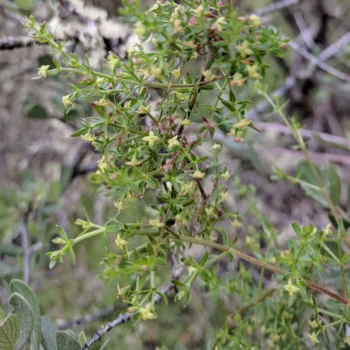
Bolander’s Bedstraw: A Delicate Native Ground Cover for Woodland Gardens
If you’re looking for a charming native ground cover that won’t take over your garden but will add delicate beauty to shady spots, meet Bolander’s bedstraw (Galium bolanderi). This understated perennial herb might not win any flashy flower contests, but it has a quiet elegance that makes it a wonderful addition to naturalistic gardens.
What is Bolander’s Bedstraw?
Bolander’s bedstraw is a native perennial herb that belongs to the coffee family. As a forb, it’s a non-woody plant that dies back to the ground each winter and returns from its roots in spring. Don’t let the term bedstraw fool you into thinking it’s just a weed – this little native has been quietly doing its job in Western forests for centuries.
You might occasionally see this plant listed under several scientific synonyms, including Galium arcuatum, Galium culbertsonii, or Galium margaricoccum, but Galium bolanderi is the accepted name.
Where Does It Grow Naturally?
This Pacific Coast native calls California and Oregon home, where it thrives in the understory of woodlands and forest edges. Its natural range gives us great clues about how to grow it successfully in our gardens.
- Species observed
- No observations
Why Grow Bolander’s Bedstraw?
Here’s why this modest native deserves a spot in your garden:
- True native plant: Supporting local ecosystems by growing plants that naturally belong in your region
- Low maintenance: Once established, it requires minimal care
- Pollinator friendly: Small white flowers attract beneficial insects
- Naturalizing ability: Spreads gently to create natural-looking ground cover
- Shade tolerant: Perfect for those challenging shady spots where other plants struggle
Garden Design and Landscaping Uses
Bolander’s bedstraw shines in woodland gardens, native plant landscapes, and naturalized areas. Its delicate appearance makes it an excellent companion plant that won’t compete visually with showier natives. Consider using it as:
- Ground cover under native trees and shrubs
- Filler plant in native plant borders
- Natural carpet in woodland pathways
- Part of a native plant restoration project
Growing Conditions
Think forest floor when planning where to plant Bolander’s bedstraw. This native prefers:
- Light: Shade to partial shade (mimicking its natural woodland habitat)
- Soil: Well-draining but moisture-retentive soil
- Water: Consistent moisture, especially during establishment
- Climate: Best suited for USDA hardiness zones 7-10
Planting and Care Tips
The good news about native plants like Bolander’s bedstraw is that they’re generally low-fuss once you get them established:
- Planting time: Fall or early spring when temperatures are mild
- Spacing: Allow room for natural spreading
- Watering: Regular water during the first growing season, then reduce as the plant establishes
- Fertilizing: Generally unnecessary – native plants are adapted to local soil conditions
- Maintenance: Minimal pruning needed; allow natural dieback in winter
Wildlife and Pollinator Benefits
While Bolander’s bedstraw might seem unassuming, its small white flowers provide nectar for various small pollinators, including flies, small bees, and other beneficial insects. As with many native plants, it likely provides habitat and food sources for local wildlife that have co-evolved with it over thousands of years.
Is Bolander’s Bedstraw Right for Your Garden?
This native is perfect for gardeners who:
- Want to support local ecosystems with native plants
- Have shady areas that need gentle ground cover
- Prefer low-maintenance, naturalistic gardens
- Live in California or Oregon where it’s naturally adapted
However, it might not be the best choice if you’re looking for bold, showy flowers or need a plant for full-sun locations.
The Bottom Line
Bolander’s bedstraw proves that native plants don’t need to be flashy to be valuable. This gentle ground cover brings authentic local character to woodland gardens while supporting native pollinators and wildlife. If you’re building a native plant garden in California or Oregon, this quiet beauty deserves consideration for your shady spots.
Remember, when sourcing any native plant, try to find locally-grown specimens or seeds collected responsibly from local populations. This ensures you’re getting plants that are truly adapted to your specific region and helps preserve the genetic diversity of our native flora.