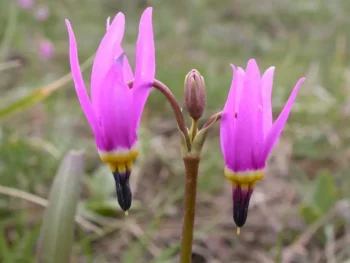
Bonneville Shootingstar: A Charming Native Spring Wildflower
If you’re looking for a native wildflower that brings early spring magic to your garden, meet the Bonneville shootingstar (Dodecatheon conjugens). This delightful perennial gets its whimsical name from its distinctive flowers that look like tiny shooting stars streaking across your garden beds – or perhaps badminton shuttlecocks if you’re feeling more sporty!
A True Western Native
The Bonneville shootingstar is a proud native of western North America, naturally occurring across an impressive range that spans both Canada and the United States. You’ll find this hardy perennial growing wild from the northern reaches of British Columbia and Alberta down through California, and eastward across Saskatchewan, Idaho, Montana, Nevada, Oregon, Washington, and Wyoming.
- Species observed
- No observations
As a facultative upland plant, it typically prefers well-drained, non-wetland sites but can occasionally tolerate wetter conditions – making it quite adaptable to various garden situations.
What Makes It Special
This herbaceous perennial belongs to the forb family, meaning it’s a non-woody flowering plant that dies back to the ground each winter. What sets the Bonneville shootingstar apart is its absolutely charming spring flower display. The blooms feature swept-back petals in shades ranging from pure white to soft pink, creating that distinctive shooting star silhouette that never fails to catch the eye.
The plant emerges early in spring, putting on its floral show when many other perennials are still snoozing underground. This early bloom time makes it particularly valuable for extending your garden’s season of interest.
Garden Design and Landscape Role
The Bonneville shootingstar shines brightest in naturalistic garden settings where its wild charm can be fully appreciated. Consider these perfect placement ideas:
- Rock gardens where its compact form fits naturally among stones
- Native plant gardens alongside other regional wildflowers
- Woodland edges where it can receive partial shade
- Naturalized meadow plantings for a truly wild look
- Front borders where its early blooms provide spring interest
Growing Conditions and Care
One of the best things about native plants like the Bonneville shootingstar is their generally low-maintenance nature once established. Here’s what this beauty needs to thrive:
Sunlight: Partial shade to full sun, though it appreciates some afternoon shade in hotter climates
Soil: Well-draining soil is essential – this plant doesn’t appreciate wet feet
Water: Moderate water during growing season, but becomes quite drought-tolerant once established
Climate: Hardy in USDA zones 3-8, this tough perennial can handle cold winters and moderate summers
Planting and Care Tips
Success with Bonneville shootingstar starts with understanding its natural rhythm:
- Plant in fall to allow for proper winter chilling requirements
- Choose a location with excellent drainage – soggy soil is this plant’s biggest enemy
- Don’t panic when it goes dormant in summer heat – this is completely normal
- Avoid overwatering once established; it prefers to stay on the drier side
- Mulch lightly to retain soil moisture but prevent crown rot
Wildlife and Pollinator Benefits
Native plants like the Bonneville shootingstar are invaluable for supporting local ecosystems. Its early spring blooms provide crucial nectar sources for native bees and other pollinators when few other flowers are available. This timing makes it particularly important for supporting pollinator populations during their active season.
Is Bonneville Shootingstar Right for Your Garden?
This native wildflower is an excellent choice for gardeners who:
- Want to support native ecosystems and pollinators
- Appreciate unique, eye-catching flower forms
- Prefer low-maintenance plants once established
- Live in western regions where it’s naturally adapted
- Enjoy early spring garden interest
However, it might not be the best fit if you’re looking for continuous summer blooms or prefer plants that maintain foliage year-round.
The Bonneville shootingstar proves that native doesn’t mean boring – sometimes it means absolutely enchanting. With its distinctive flowers, easy care requirements, and valuable ecosystem benefits, this charming wildflower deserves a spot in more western gardens. Give it the well-drained conditions it craves, and you’ll be rewarded with years of delightful spring shooting stars dancing through your landscape.