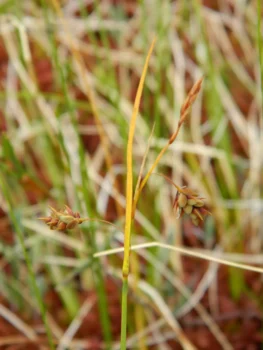
Boreal Bog Sedge: A Hardy Native for Your Wettest Garden Spots
If you’ve ever stood at the edge of a boggy area in your yard, scratching your head about what on earth could possibly thrive there, let me introduce you to a delightful little native called boreal bog sedge (Carex magellanica irrigua). This unassuming perennial sedge might just be the perfect solution for those challenging wet spots that leave most plants throwing in the towel.
What Exactly Is Boreal Bog Sedge?
Boreal bog sedge is a grass-like perennial that belongs to the sedge family (Cyperaceae). Don’t let the name fool you – while it’s called a grass, it’s actually quite different from your typical lawn grass. This hardy little plant forms small, neat tufts of narrow, dark green leaves that create a subtle, naturalistic beauty in the landscape.
Like many sedges, boreal bog sedge has had quite a few names over the years. You might encounter it listed under various synonyms including Carex paupercula or Carex magellanica var. irrigua, but they’re all referring to the same dependable plant.
Where Does It Call Home?
This sedge is a true North American native with an impressively wide distribution. You’ll find it naturally occurring across a vast range that includes Alaska, most Canadian provinces and territories, and numerous states throughout the northern United States. From the Maritime provinces of Canada down to states like Colorado, Utah, and even parts of the Northeast and Great Lakes regions, this adaptable sedge has made itself at home in wet, boggy areas.
- Species observed
- No observations
Why Your Garden Might Love This Sedge
Here’s where boreal bog sedge really shines – it absolutely loves what most plants hate: constantly wet, poorly drained soils. If you have that perpetually soggy spot in your yard where nothing else seems to survive, this sedge could be your new best friend.
The plant typically grows as a low, clumping sedge that won’t overwhelm your space. Its understated appearance makes it perfect for:
- Bog gardens and wetland restoration projects
- Rain gardens that collect runoff
- Naturalistic landscapes mimicking native ecosystems
- Groundcover in consistently moist areas
- Pond margins and stream edges
Growing Conditions That Make It Happy
Boreal bog sedge is refreshingly straightforward about its needs – it wants to be wet! This sedge thrives in:
- Constantly moist to saturated soils
- Acidic soil conditions
- Full sun to partial shade
- USDA hardiness zones 2 through 7
Unlike many garden plants that need well-draining soil, this sedge actually prefers poor drainage. It’s naturally found in bogs, fens, and other wetland environments where water sits for extended periods.
Planting and Care Tips
The beauty of boreal bog sedge lies in its low-maintenance nature once you get it established in the right conditions:
- Plant in spring when soil temperatures warm up
- Choose the wettest, most challenging spot in your garden
- Space plants about 12-18 inches apart for groundcover effect
- Keep soil consistently moist – this is one plant where you can’t overwater
- No fertilization needed; it’s adapted to nutrient-poor bog conditions
- Minimal pruning required; simply remove any dead foliage in early spring
Wildlife and Ecological Benefits
While boreal bog sedge might not be the showiest plant in terms of attracting pollinators (it’s wind-pollinated, after all), it plays an important role in wetland ecosystems. The plant provides habitat and food sources for various wildlife species, and its root system helps stabilize wet soils and improve water quality through natural filtration.
Is This Sedge Right for Your Garden?
Boreal bog sedge is definitely not a plant for every garden situation, but it’s absolutely perfect for the right one. If you have consistently wet, boggy conditions that challenge most other plants, this native sedge could be exactly what you need. It’s particularly valuable for gardeners interested in creating authentic wetland habitats or managing stormwater runoff naturally.
However, if your garden tends toward the dry side, you’ll want to look for other native options better suited to your conditions. This sedge simply won’t be happy without consistent moisture.
For those lucky enough to have the wet conditions this sedge craves, boreal bog sedge offers a reliable, low-maintenance way to transform challenging boggy areas into attractive, ecologically valuable parts of your landscape. Sometimes the most unassuming plants turn out to be exactly what our gardens – and local ecosystems – need most.