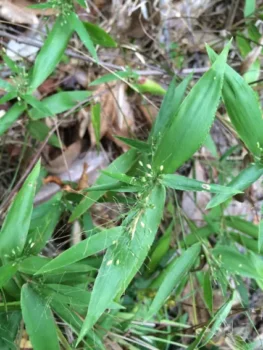
Bosc’s Panicgrass: A Delicate Native Grass for Shady Spots
If you’re looking for a graceful native grass that thrives in the shadows where other grasses fear to tread, let me introduce you to Bosc’s panicgrass (Dichanthelium boscii). This charming perennial grass might not be the showiest plant in your garden, but it’s definitely one of the most reliable when it comes to filling those tricky shaded areas with subtle beauty.
What Makes Bosc’s Panicgrass Special?
Bosc’s panicgrass is a true native gem, naturally occurring across much of the eastern and southeastern United States. You’ll find this adaptable grass growing wild from Massachusetts down to Florida and stretching west all the way to Texas and Kansas. It’s been quietly doing its job in American ecosystems for centuries, and now it’s ready to do the same in your garden.
- Species observed
- No observations
As a member of the graminoid family, this fine-textured grass brings a delicate, almost ethereal quality to the landscape. Its slender stems and airy seed heads create gentle movement and soft texture that contrasts beautifully with broader-leaved woodland plants.
Why Your Garden Will Love This Grass
Here’s where Bosc’s panicgrass really shines – it’s practically tailor-made for those challenging spots in your yard:
- Shade tolerance: While most grasses demand full sun, this one actually prefers partial shade to full shade
- Low maintenance: Once established, it pretty much takes care of itself
- Erosion control: The spreading rhizomes help stabilize soil on slopes
- Wildlife friendly: Seeds provide food for birds and small mammals
- Year-round interest: Offers texture in multiple seasons
Perfect Spots for Planting
Bosc’s panicgrass is ideal for woodland gardens, naturalized landscapes, and native plant gardens. It works wonderfully as a ground cover in areas where you want something more interesting than mulch but less demanding than traditional perennials. Think of it as nature’s carpet – soft, subtle, and surprisingly sophisticated.
This grass also excels in rain gardens and areas with variable moisture, making it a smart choice for sustainable landscaping projects.
Growing Bosc’s Panicgrass Successfully
The beauty of this native grass lies in its simplicity. Hardy in USDA zones 5-9, it adapts to a wide range of conditions:
Ideal Growing Conditions:
- Light: Partial shade to full shade (though it tolerates some morning sun)
- Soil: Moist to moderately dry, adaptable to various soil types
- Water: Moderate moisture needs; drought tolerant once established
- pH: Tolerates a range of soil pH levels
Planting and Care Tips:
Getting started with Bosc’s panicgrass is refreshingly straightforward. You can grow it from seed (though germination can be slow and sporadic) or establish it more reliably through division of existing clumps. Plant in spring or early fall when temperatures are moderate.
Once planted, this grass spreads gradually through underground rhizomes, creating natural colonies over time. Don’t worry – it’s not aggressive like some spreading grasses. Instead, it fills in at a civilized pace, giving you control over its expansion.
Care is minimal: occasional watering during dry spells in the first year, and maybe an annual trim in late winter if you prefer a tidy look. Otherwise, let nature take its course.
The Bottom Line
Bosc’s panicgrass might not win any flashy garden contests, but it’s exactly the kind of steady, reliable native plant that forms the backbone of sustainable landscapes. If you have shady areas that need gentle ground cover, slopes that need stabilizing, or you simply want to support local ecosystems with native plants, this unassuming grass deserves serious consideration.
Sometimes the best garden plants are the ones that quietly do their job while asking for very little in return. Bosc’s panicgrass is definitely one of those plants – and your local wildlife will thank you for it.