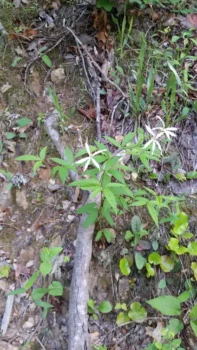
Bowman’s Root: A Delicate Native Beauty for Shade Gardens
If you’re looking to add some understated elegance to your shade garden, let me introduce you to one of North America’s most charming native wildflowers. Bowman’s root (Gillenia trifoliata) might not be the showiest plant in the garden center, but this perennial gem has a quiet beauty that will win you over once you get to know it.
What is Bowman’s Root?
Bowman’s root is a native perennial forb that belongs to the rose family. Don’t let the fancy botanical name intimidate you – this plant is surprisingly easy-going once established. You might also see it listed under its synonym Porteranthus trifoliatus in some plant catalogs, but it’s the same delightful plant either way.
Where Does It Come From?
This lovely native calls eastern North America home, naturally growing from southern Ontario down to northern Georgia and west to Michigan and Arkansas. You’ll find it thriving in these states: Alabama, Arkansas, Ontario, Delaware, District of Columbia, Georgia, Illinois, Kentucky, Maryland, Massachusetts, Michigan, Missouri, New Jersey, New York, North Carolina, Ohio, Pennsylvania, Rhode Island, South Carolina, Tennessee, Virginia, and West Virginia.
- Species observed
- No observations
Important note: Bowman’s root is considered rare in Arkansas (S1 status) and New Jersey (S2 status with Highlands Listed designation). If you live in these areas, please source your plants responsibly from reputable native plant nurseries to avoid impacting wild populations.
Why You’ll Fall in Love with Bowman’s Root
Here’s what makes this plant special:
- Delicate flowers: In late spring to early summer, Bowman’s root produces clusters of small white flowers with five narrow, almost wispy petals that dance in the breeze
- Attractive foliage: The three-part leaves (that’s what trifoliata means!) create a nice textural backdrop throughout the growing season
- Stunning fall color: Come autumn, the leaves turn gorgeous shades of orange and red
- Graceful habit: The plant grows 2-4 feet tall with an upright, somewhat open form that adds vertical interest without being overwhelming
- Pollinator magnet: Bees, butterflies, and other beneficial insects love the flowers
Perfect for These Garden Styles
Bowman’s root is incredibly versatile and fits beautifully into:
- Woodland gardens
- Shade borders
- Native plant gardens
- Naturalized landscapes
- Cottage-style gardens with a wild feel
It’s particularly lovely when planted in drifts or combined with other woodland natives like wild ginger, coral bells, or ferns.
Growing Conditions That Make It Happy
One of the best things about Bowman’s root is that it’s not particularly fussy. Here’s what it prefers:
- Light: Partial shade to shade (it can handle some morning sun but appreciates afternoon shade)
- Soil: Moist, well-draining soil with plenty of organic matter – think rich woodland soil
- Hardiness: Zones 4-8, so it’s quite cold-hardy
- Water: Consistent moisture, but not soggy conditions
Planting and Care Tips
Getting started with Bowman’s root is refreshingly straightforward:
- When to plant: Spring or fall are ideal times
- Spacing: Give plants about 18-24 inches apart – they’ll slowly spread over time
- Soil prep: Work in some compost or leaf mold to improve soil structure
- Watering: Keep consistently moist the first year while establishing
- Maintenance: Very low maintenance once established – just cut back in late fall or early spring
- Spreading: The plant spreads slowly by underground rhizomes, creating nice natural colonies over time
Bonus Benefits
As if being beautiful weren’t enough, Bowman’s root offers some extra perks:
- Deer tend to leave it alone
- It’s drought-tolerant once established
- The flowers make lovely, if delicate, cut flowers
- It supports native pollinators and beneficial insects
The Bottom Line
Bowman’s root might not grab attention like a flashy annual, but it’s exactly the kind of plant that makes a garden special – quietly beautiful, perfectly adapted to its environment, and supportive of local wildlife. If you have a shady spot that could use some understated elegance, this native charmer deserves a place in your garden. Just remember to source it responsibly, especially if you’re in Arkansas or New Jersey where it’s considered rare.
Trust me, once you see those delicate white flowers dancing in a spring breeze, you’ll understand why Bowman’s root has such a devoted following among native plant enthusiasts!