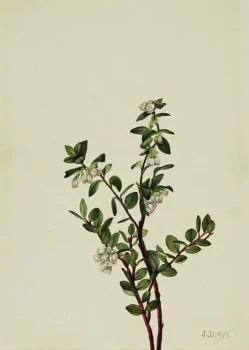
Box Huckleberry: A Rare Native Gem for Your Woodland Garden
If you’re looking for a unique native groundcover that’s both beautiful and ecologically valuable, box huckleberry (Gaylussacia brachycera) might just be the plant for you. This charming little evergreen shrub is one of nature’s more mysterious offerings – a slow-growing treasure that’s been quietly carpeting forest floors in the eastern United States for centuries.
What Makes Box Huckleberry Special?
Box huckleberry is a perennial shrub that stays relatively low to the ground, typically growing less than 13-16 feet in height, though most specimens remain much shorter. Its leathery, oval-shaped evergreen leaves give it a distinctive appearance that stands out in woodland settings. In spring, it produces delicate white to pink bell-shaped flowers that eventually develop into small, blue-black berries that wildlife absolutely love.
What makes this plant truly fascinating is its growth habit – it spreads slowly through underground rhizomes, creating colonies that can persist for hundreds or even thousands of years. Some colonies are believed to be among the oldest living organisms in North America!
Where Box Huckleberry Calls Home
This native beauty is found naturally in Delaware, Kentucky, Maryland, Pennsylvania, Tennessee, Virginia, and West Virginia. It’s perfectly adapted to the cool, moist conditions of eastern deciduous forests, particularly in the Appalachian region.
- Species observed
- No observations
Important Conservation Note
Here’s something crucial every gardener should know: box huckleberry has a Global Conservation Status of S3, meaning it’s considered vulnerable. This means it’s either very rare throughout its range or found only in restricted areas. If you’re interested in growing this plant, it’s essential to source it responsibly from reputable native plant nurseries that propagate their own stock rather than collecting from wild populations.
Why Grow Box Huckleberry?
Despite its slow growth, box huckleberry offers several compelling benefits for the right garden:
- Year-round interest: As an evergreen, it provides structure and color throughout all seasons
- Pollinator support: The spring flowers attract bees and other small pollinators
- Wildlife value: The berries feed birds and small mammals
- Low maintenance: Once established, it requires minimal care
- Unique groundcover: Creates distinctive colonies in woodland settings
- Historical significance: You’re growing a piece of living history
Perfect Garden Settings
Box huckleberry thrives in woodland gardens, native plant gardens, and naturalistic landscapes. It’s particularly well-suited for:
- Shaded slopes where erosion control is needed
- Understory plantings in mature tree gardens
- Native plant collections
- Areas where you want low-maintenance groundcover
Growing Conditions and Care
Box huckleberry is hardy in USDA zones 5-8 and has some specific preferences:
Light: Partial to full shade – it naturally grows under forest canopies
Soil: Acidic, well-draining soil that stays consistently moist
Water: Requires consistent moisture but not waterlogged conditions
pH: Prefers acidic conditions similar to other members of the heath family
Planting and Care Tips
Successfully growing box huckleberry requires patience and the right conditions:
- Site preparation: Ensure your planting area has acidic soil and good drainage
- Mulching: Apply organic mulch to maintain consistent soil moisture and temperature
- Watering: Keep soil consistently moist, especially during establishment
- Patience is key: This plant grows very slowly, so don’t expect rapid expansion
- Minimal pruning: Generally requires little to no pruning
The Bottom Line
Box huckleberry is definitely not a plant for every garden or every gardener. Its slow growth rate and specific requirements mean it’s best suited for patient gardeners who appreciate subtle beauty and want to contribute to conservation efforts. If you have the right conditions – acidic soil, consistent moisture, and partial shade – and you can source it responsibly, box huckleberry can be a wonderful addition to a woodland garden.
Just remember: this is a plant worth protecting. Always purchase from reputable nurseries that propagate their own plants, and never collect from wild populations. By growing box huckleberry responsibly, you’re not just adding a unique plant to your garden – you’re helping preserve a vulnerable piece of our natural heritage.