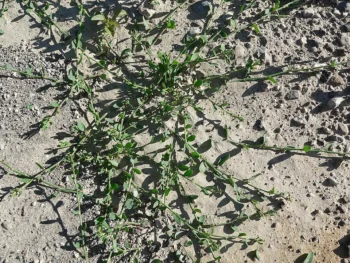
Box Knotweed: A Humble Native Annual Worth Getting to Know
When it comes to native plants, some steal the spotlight with showy blooms and dramatic foliage, while others quietly go about their business of supporting local ecosystems. Box knotweed (Polygonum buxiforme) definitely falls into the latter category – but don’t let its modest appearance fool you. This unassuming little annual has some serious credentials as a North American native.
What Exactly Is Box Knotweed?
Box knotweed is a native annual forb that belongs to the buckwheat family. As an annual, it completes its entire life cycle in one growing season, producing seeds before winter arrives. The plant gets its box name from its small, somewhat rounded leaves that have a boxy appearance, while knotweed refers to the characteristic swollen nodes along its stems – a family trait shared with other Polygonum species.
You might also encounter this plant listed under its botanical synonyms, including Polygonum aviculare ssp. buxiforme, though the accepted name remains Polygonum buxiforme.
Where Does Box Knotweed Call Home?
Talk about a well-traveled native! Box knotweed has an impressively wide distribution across North America. You can find it growing naturally from Alaska down through Canada and across most of the continental United States. Its range includes states from coast to coast – from Maine to California, and from North Dakota down to Texas and South Carolina. This extensive distribution spans provinces like Alberta, British Columbia, Ontario, and Quebec, plus territories including Yukon and Labrador.
- Species observed
- No observations
A Word About Rarity
Here’s something important to know: while box knotweed has a wide overall range, it’s not necessarily common everywhere it occurs. In New Jersey, for instance, it carries a rarity status of S3, meaning it’s considered uncommon to rare in the state. If you’re interested in growing box knotweed, please make sure to source seeds or plants responsibly from reputable native plant suppliers – never collect from wild populations.
Why Consider Box Knotweed for Your Garden?
You might wonder why anyone would want to grow such a humble-looking plant. Here’s the thing about box knotweed – it’s all about function over flash:
- True native credentials: Supporting a plant that’s genuinely native to North America
- Low maintenance: As an annual that self-seeds, it requires minimal intervention once established
- Pollinator support: Those tiny white to pinkish flowers may be small, but they provide nectar for beneficial insects and small pollinators
- Naturalistic appeal: Perfect for wildlife gardens and naturalized areas where you want an authentic native plant community
- Tough constitution: Adapted to survive in various conditions across its wide native range
Growing Box Knotweed Successfully
The beauty of box knotweed lies in its adaptability – this plant has thrived across diverse North American landscapes for millennia, so it’s not particularly fussy about growing conditions.
Hardiness and Climate
Given its extensive range from Alaska to the southern United States, box knotweed can handle USDA hardiness zones 2 through 9. This makes it suitable for most North American gardeners.
Light and Soil Requirements
Box knotweed tolerates a range of light conditions from full sun to partial shade. It’s also quite adaptable when it comes to soil, growing in various soil types and tolerating poor conditions that might challenge other plants.
Planting and Care
As an annual, box knotweed is typically grown from seed:
- Direct sow seeds in fall or early spring
- Lightly cover seeds or scatter on prepared soil surface
- Water gently until germination occurs
- Once established, the plants are quite drought-tolerant
- Allow some plants to go to seed if you want them to return next year
Where Box Knotweed Shines in the Landscape
Box knotweed isn’t going to be the star of a formal flower border, but it has its perfect niches:
- Wildlife and pollinator gardens: Provides food for beneficial insects
- Naturalized areas: Helps create authentic native plant communities
- Restoration projects: Useful for establishing native ground cover
- Low-maintenance areas: Fills in spaces with minimal care required
The Bottom Line
Box knotweed might not win any beauty contests, but it earns its place in native gardens through reliability, ecological value, and authentic North American heritage. If you’re creating naturalized areas, supporting local wildlife, or simply want to grow plants that truly belong in your region’s ecosystem, this modest annual deserves consideration.
Remember to source your seeds responsibly, especially given its rarity status in some areas. And don’t expect dramatic garden transformation – expect instead the quiet satisfaction of growing a plant that’s been quietly supporting North American ecosystems for countless generations.