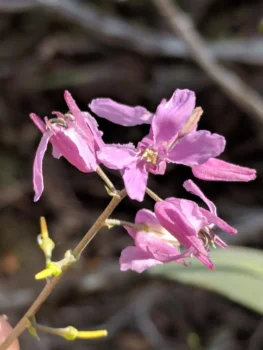
Bracted Jewelflower: A Rare Texas Treasure for Your Native Garden
If you’re a native plant enthusiast looking to add something truly special to your Texas garden, meet the bracted jewelflower (Streptanthus bracteatus). This delicate annual wildflower is one of the Lone Star State’s hidden gems – quite literally, as it’s considered a rare species that deserves our attention and protection.
What Makes Bracted Jewelflower Special?
The bracted jewelflower is a charming herbaceous plant that belongs to the mustard family. As an annual or biennial forb, it completes its life cycle in one to two years, making every bloom season precious. Don’t let its delicate appearance fool you – this little wildflower is perfectly adapted to Texas’s challenging growing conditions.
What sets this jewelflower apart are its distinctive flowers, which range from white to pale purple and are surrounded by prominent bracts (modified leaves) that give the plant its common name. These bracts create an almost jewelry-like appearance, hence jewelflower – nature’s own botanical bling!
Where Does Bracted Jewelflower Call Home?
This special plant is a true Texan, found exclusively in the central regions of the state. It’s what botanists call an endemic species – meaning it grows naturally nowhere else on Earth. The bracted jewelflower has adapted specifically to Texas’s limestone soils and rocky terrain, making it a perfect example of local adaptation.
- Species observed
- No observations
A Word About Rarity
Important consideration: The bracted jewelflower has a Global Conservation Status of S1S2, indicating it’s quite rare in the wild. If you’re interested in growing this plant, it’s crucial to source seeds or plants only from reputable native plant nurseries that propagate their stock rather than collect from wild populations. Never collect seeds or plants from natural areas.
Why Grow Bracted Jewelflower?
Despite its rarity challenges, there are compelling reasons to include this native in your garden:
- Support conservation efforts by maintaining genetic diversity in cultivation
- Provide nectar for native pollinators, especially small bees and early butterflies
- Add authentic Texas character to your native plant garden
- Enjoy unique spring blooms that few gardeners get to experience
- Contribute to habitat restoration projects in appropriate areas
Garden Design and Landscape Role
The bracted jewelflower works beautifully in several garden settings:
- Native plant gardens: Perfect for authentic Texas wildflower displays
- Rock gardens: Thrives among limestone rocks and gravel
- Xeriscapes: Requires minimal water once established
- Conservation gardens: Ideal for rare plant preservation efforts
At 1-3 feet tall with a narrow, upright growth habit, it works well as a mid-border plant or naturalized in larger areas. Its subtle beauty makes it an excellent companion for other Texas natives like bluebonnets, Indian paintbrush, and native grasses.
Growing Conditions and Care
The bracted jewelflower is surprisingly adaptable once you understand its preferences:
- Soil: Well-draining, alkaline soils; limestone-based preferred
- Sun exposure: Full sun to partial shade
- Water: Drought tolerant once established; avoid overwatering
- USDA Zones: 8-9 (matches its native Texas range)
- Bloom time: Spring (March through May)
Planting and Care Tips
Growing bracted jewelflower successfully requires mimicking its natural habitat:
- Plant seeds in fall for spring germination
- Ensure excellent drainage – soggy soil is this plant’s enemy
- Add limestone gravel or crushed granite to improve soil drainage and pH
- Minimal fertilization needed; over-fertilizing can harm the plant
- Allow plants to self-seed for natural populations
- Water sparingly; this plant prefers dry conditions
Pollinator and Wildlife Benefits
Though small, the bracted jewelflower punches above its weight in supporting local ecosystems. Its early spring blooms provide crucial nectar when few other plants are flowering. Small native bees, beneficial insects, and early butterflies all benefit from its modest but important contribution to the pollinator buffet.
The Bottom Line
The bracted jewelflower isn’t for every gardener – it’s a plant for those who appreciate subtlety, rarity, and the deep satisfaction of growing something truly special. If you can source it responsibly and provide the right growing conditions, you’ll be rewarded with a genuine piece of Texas botanical heritage in your garden.
Remember, by growing rare natives like the bracted jewelflower, you’re not just creating a beautiful garden – you’re participating in conservation efforts and helping preserve Texas’s unique natural legacy for future generations. Now that’s something worth celebrating!