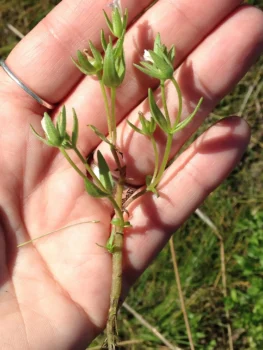
Bractless Hedgehyssop: A Tiny Native Gem for Your Wetland Garden
If you’re looking to create an authentic wetland garden or restore a boggy area of your property, meet bractless hedgehyssop (Gratiola ebracteata) – a charming little native that’s perfectly adapted to life in the wet lane. This modest annual forb might not win any beauty contests, but it plays an important role in western wetland ecosystems and could be just the plant your water garden has been missing.
What Makes Bractless Hedgehyssop Special?
Bractless hedgehyssop is a true native of western North America, naturally occurring from British Columbia down through California and eastward to Montana. As an annual forb, it completes its entire life cycle in one growing season, producing small white tubular flowers that are delicate and understated rather than showy.
The plant gets its bractless name from a botanical detail – unlike some of its hedgehyssop relatives, this species lacks the small leaf-like structures (bracts) at the base of its flowers. It’s these little details that help botanists tell one species from another, but for gardeners, what matters most is understanding where and how this plant likes to grow.
Where Does Bractless Hedgehyssop Grow?
In the wild, you’ll find bractless hedgehyssop growing across the western states including British Columbia, California, Idaho, Montana, Oregon, and Washington. It’s a plant that has adapted to the specific conditions of western wetland environments.
- Species observed
- No observations
The Wetland Specialist
Here’s what makes bractless hedgehyssop truly unique: it’s classified as an obligate wetland plant across all western regions where it grows. This means it almost always occurs in wetlands and requires consistently moist to wet conditions to survive and thrive. If your property has a naturally wet area, seasonal pond, or you’re creating a rain garden, this could be your new best friend.
Should You Plant Bractless Hedgehyssop?
The answer depends entirely on your garden situation and goals:
- Perfect if you have: Wet areas that stay moist year-round, a bog garden, wetland restoration project, or rain garden
- Not suitable if you have: Typical garden beds with well-drained soil, dry conditions, or xeriscape gardens
- Great for: Native plant enthusiasts, wildlife habitat creation, and specialized water gardens
Growing Conditions and Care
Successfully growing bractless hedgehyssop is all about mimicking its natural wetland habitat:
Soil and Water Requirements
- Consistently moist to wet soil – this plant cannot tolerate drought
- Clay, sandy, or organic soils that retain moisture
- Areas with seasonal flooding or year-round moisture
Light and Climate
- Full sun to partial shade
- Thrives in USDA hardiness zones 4-9 in western regions
- Adapted to the climate patterns of the western mountains, valleys, and coastal areas
Planting and Maintenance
- Direct seed in wet areas during spring
- Minimal maintenance once established in appropriate conditions
- As an annual, it will self-seed if conditions remain suitable
- No fertilization needed – adapted to naturally nutrient-rich wetland soils
Wildlife and Pollinator Benefits
While small in stature, bractless hedgehyssop’s tiny white flowers provide nectar for small pollinators including native bees, flies, and other beneficial insects. In a naturalized wetland setting, it contributes to the diverse plant community that supports various wildlife species.
The Bottom Line
Bractless hedgehyssop isn’t a plant for every garden, but it’s perfect for the right situation. If you’re working with naturally wet conditions, restoring wetland habitat, or creating specialized water gardens, this native annual offers an authentic touch that supports local ecosystems. Just remember – this is a plant that demands wet feet, so save it for areas where water is abundant and consistent.
For gardeners working with drier conditions, consider other native options better suited to your specific growing environment. But if you’ve got the wet spot and the conservation mindset, bractless hedgehyssop could be a wonderful addition to your native plant palette.