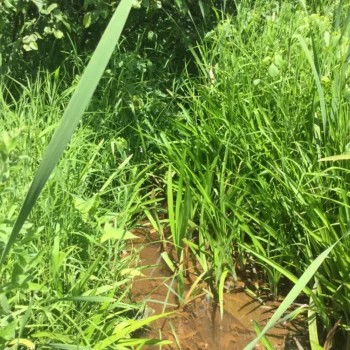
Branched Bur-Reed: A Native Aquatic Wonder for Water Gardens
If you’re looking to add some authentic North American flair to your water garden or wetland area, branched bur-reed (Sparganium androcladum) might just be the perfect native plant for you. This distinctive perennial brings both ecological value and unique visual interest to any wet landscape.
What Makes Branched Bur-Reed Special
Branched bur-reed is a fascinating native forb that’s perfectly adapted to life in and around water. As a perennial plant, it lacks significant woody tissue but returns year after year to grace your wetland garden with its characteristic grass-like appearance and distinctive spherical seed heads that give it the bur-reed name.
This plant goes by the botanical name Sparganium androcladum, and you might occasionally see it listed under its synonym Sparganium lucidum. Whatever name it goes by, this native beauty is a true North American original.
Where You’ll Find It Growing Wild
Branched bur-reed has an impressive native range across North America, calling both Canada and the lower 48 states home. You can find wild populations thriving in states from Maine down to Louisiana, and from the Atlantic coast all the way to Montana and Texas. It grows naturally in Arkansas, Ontario, Connecticut, Quebec, Illinois, Indiana, Iowa, Kentucky, Louisiana, Maine, Maryland, Massachusetts, Michigan, Minnesota, Mississippi, Missouri, Montana, New Hampshire, New Jersey, New York, Ohio, Oklahoma, Pennsylvania, Rhode Island, Tennessee, Texas, Vermont, Virginia, West Virginia, and Wisconsin.
- Species observed
- No observations
A True Wetland Specialist
Here’s where branched bur-reed really shines: it’s classified as an Obligate Wetland plant across all regions where it grows. This means it almost always occurs in wetlands naturally, making it absolutely perfect for:
- Rain gardens and bioswales
- Pond edges and water garden margins
- Wetland restoration projects
- Bog gardens
- Areas with consistently wet soils
Important Conservation Note
Before you rush out to plant branched bur-reed, there’s something important to know: in Arkansas, this species has a rarity status of S1, meaning it’s critically imperiled in that state. If you live in Arkansas or are sourcing plants, please make sure to obtain your branched bur-reed from responsible, ethical nurseries that don’t collect from wild populations.
Growing Branched Bur-Reed Successfully
The good news is that if you can provide the right wet conditions, branched bur-reed is relatively easy to grow. Here’s what you need to know:
Perfect Growing Conditions
- Water: Requires consistently moist to wet soils or shallow water
- Sunlight: Thrives in full sun to partial shade
- Soil: Adapts to various wet soil types
- Climate: Hardy in USDA zones 3-8
Planting and Care Tips
Spring is the ideal time to plant branched bur-reed. Once established in the right wet conditions, this native requires minimal care – it’s perfectly adapted to thrive in its preferred wetland environment. The key is ensuring it never dries out completely.
Why Choose Branched Bur-Reed for Your Garden
While branched bur-reed might not attract butterflies and bees like some flowering plants (it’s wind-pollinated), it serves crucial ecological functions in wetland ecosystems. Its distinctive architectural form adds visual interest to water gardens, and as a native species, it supports local wildlife and helps maintain biodiversity.
If you’re creating a naturalized pond setting, restoring wetland areas, or simply want to embrace native plant gardening in wet areas of your landscape, branched bur-reed offers an authentic touch of North American wetland beauty. Just remember to source it responsibly, especially if you’re in Arkansas where it’s considered rare.
This unique native proves that sometimes the most interesting garden plants are the ones that have been thriving in our local ecosystems for thousands of years – we just need to give them the wet feet they crave!