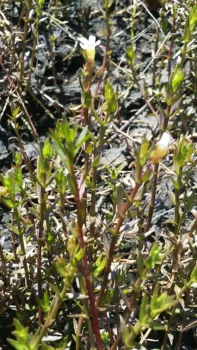
Branched Hedgehyssop: A Hidden Gem for Wet Native Gardens
If you’re looking for a native plant that thrives in those perpetually soggy spots in your garden, let me introduce you to branched hedgehyssop (Gratiola ramosa). This unassuming little perennial might not win any beauty contests, but it’s exactly what your wet, difficult-to-plant areas have been waiting for.
What is Branched Hedgehyssop?
Branched hedgehyssop is a native perennial forb – basically a soft-stemmed, non-woody plant that comes back year after year. Don’t let the humble name fool you; this southeastern native has been quietly doing its job in wetlands and moist areas for centuries. It’s perfectly adapted to conditions that would make most garden plants throw in the trowel.
Where Does It Call Home?
This moisture-loving native spans across the southeastern United States, naturally occurring in Alabama, Delaware, Florida, Georgia, Louisiana, Maryland, Mississippi, North Carolina, and South Carolina. You’ll find it thriving in coastal plains, wetland edges, and anywhere the soil stays consistently moist.
- Species observed
- No observations
Why Consider Branched Hedgehyssop for Your Garden?
Here’s where this little plant really shines – it’s the perfect solution for those challenging wet spots that leave most gardeners scratching their heads. If you have areas that flood seasonally, stay soggy after rain, or just never seem to dry out, branched hedgehyssop could be your new best friend.
The plant produces small, delicate white to pale purple tubular flowers that may be modest in size but pack a punch for native pollinators. Small native bees and other beneficial insects appreciate these blooms, making your garden a more welcoming habitat for local wildlife.
Garden Design and Landscape Role
Think of branched hedgehyssop as nature’s groundcover for wet areas. It works beautifully in:
- Rain gardens and bioswales
- Bog gardens or wetland restoration areas
- Native plant gardens with naturalized designs
- Pond or water feature margins
- Problem areas with poor drainage
Its low-growing, spreading habit makes it ideal for filling in gaps between larger wetland plants or creating a natural carpet in areas where grass just won’t cooperate.
Growing Conditions and Care
The beauty of branched hedgehyssop lies in its simplicity. This plant is happiest in USDA hardiness zones 7-10, which aligns perfectly with its native range. Here’s what it needs to thrive:
- Moisture: Consistently moist to wet soil – this plant actually tolerates flooding
- Light: Partial shade to full sun (quite adaptable)
- Soil: Not picky about soil type as long as it stays moist
- Maintenance: Extremely low once established
As a facultative wetland plant, branched hedgehyssop usually occurs in wetlands but can occasionally tolerate non-wetland conditions – though it definitely prefers to keep its feet wet.
Planting and Care Tips
Getting branched hedgehyssop established is refreshingly straightforward:
- Plant in spring when soil is workable
- Choose the wettest, most challenging spot in your garden
- Water regularly the first season (though this likely won’t be necessary in wet areas)
- Be patient – like many native plants, it may take a season to fully establish
- No fertilizing needed – it’s adapted to naturally nutrient-rich wetland soils
The Bottom Line
Branched hedgehyssop might not be the showstopper of your garden, but it’s the reliable friend who shows up when others can’t handle the conditions. If you’re dealing with wet, problematic areas and want to support native ecosystems, this southeastern native deserves serious consideration. It’s proof that sometimes the most valuable plants are the ones that quietly do their job without asking for much in return.
Plus, there’s something deeply satisfying about turning your garden’s biggest challenge into its most successful native habitat. Your local pollinators – and your sanity – will thank you for it.