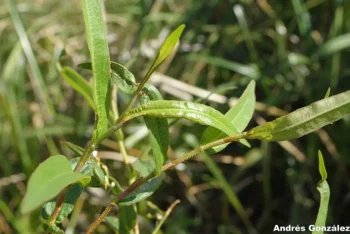
Branched Tearthumb: A Mysterious Native Wetland Plant Worth Knowing
Meet branched tearthumb (Polygonum meisnerianum), one of those intriguing native plants that seems to fly under the radar in gardening circles. This southeastern native is part of the knotweed family and represents a fascinating example of how much we still have to learn about our native flora.
What Is Branched Tearthumb?
Branched tearthumb is a perennial forb—essentially a non-woody plant that comes back year after year. You might also see it listed under its synonym Persicaria meisneriana, as botanical names sometimes shift as scientists learn more about plant relationships. As a forb, it lacks the woody stems of shrubs and trees, instead producing herbaceous growth that dies back in winter and reemerges from underground parts each spring.
Where You’ll Find This Native
This plant calls the southeastern United States home, with confirmed populations in Florida, Georgia, Louisiana, South Carolina, and Texas. It’s a true native to the lower 48 states, making it a valuable addition to native plant gardens in these regions.
- Species observed
- No observations
A Water-Loving Plant
Here’s where branched tearthumb gets really interesting from a gardening perspective. This plant has different relationships with water depending on where it grows:
- Atlantic and Gulf Coastal Plain: Almost always found in wetlands (obligate wetland status)
- Eastern Mountains and Piedmont: Can grow in both wet and drier conditions (facultative status)
This flexibility suggests it might be adaptable to various garden situations, though it clearly prefers consistently moist conditions in most of its range.
The Challenge: Limited Information
Here’s the honest truth about branched tearthumb—it’s something of a mystery plant in cultivation. Unlike many popular natives, there’s surprisingly little documented information about growing this species in home gardens. We don’t have detailed records of its:
- Mature size and growth rate
- Specific soil preferences
- Pollinator relationships
- Propagation methods
- Hardiness zones
This lack of information doesn’t necessarily mean it’s rare or problematic—it might simply mean it hasn’t caught the attention of the gardening world yet.
Should You Grow Branched Tearthumb?
Given the limited cultivation information, growing branched tearthumb would be something of an adventure. If you’re in its native range and have consistently moist to wet conditions, it could be worth experimenting with—but proceed thoughtfully:
- Start small to observe its growth habits
- Choose a location where spreading won’t be problematic
- Ensure you’re getting plants from reputable native plant sources
- Consider it for naturalized areas rather than formal garden beds
Better-Known Alternatives
If you’re drawn to the idea of native wetland plants but want something with more established growing information, consider these southeastern natives:
- Swamp milkweed (Asclepias incarnata)
- Cardinal flower (Lobelia cardinalis)
- Blue flag iris (Iris virginica)
- Marsh hibiscus (Hibiscus moscheutos)
The Bottom Line
Branched tearthumb represents one of those fascinating gaps in our native plant knowledge. While we know it’s a legitimate native with an interesting wetland ecology, its cultivation potential remains largely unexplored. For the adventurous native plant gardener in the Southeast, it could be an interesting experiment—just be prepared to learn as you go and keep detailed notes for the rest of us!
Sometimes the most rewarding gardening experiences come from working with these lesser-known natives. Who knows? You might be among the first to unlock the secrets of successfully growing branched tearthumb in cultivation.