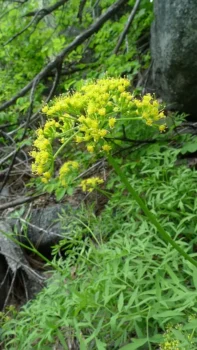
Brandegee’s Desertparsley: A Hidden Gem for Pacific Northwest Gardens
If you’re looking to add a touch of authentic Pacific Northwest character to your garden, meet Brandegee’s desertparsley (Lomatium brandegeei). This unassuming native perennial might not win any flashy flower contests, but it’s got something far more valuable: a deep connection to the local landscape and an impressive ability to thrive where other plants struggle.
What is Brandegee’s Desertparsley?
Brandegee’s desertparsley is a native perennial forb that belongs to the carrot family. Don’t let the name fool you—this isn’t actually a parsley you’d want to sprinkle on your pasta! It’s a herbaceous plant that lacks woody tissue above ground, dying back to its base each winter and reemerging fresh each spring.
You might also see this plant listed under its botanical synonym Cynomarathrum brandegeei, but Lomatium brandegeei is the accepted name today.
Where Does It Call Home?
This Pacific Northwest native has a relatively limited range, growing naturally in British Columbia, Canada, and Washington State. Its restricted distribution makes it a true regional specialty—when you plant Brandegee’s desertparsley, you’re growing a piece of authentic local flora.
- Species observed
- No observations
A Word About Rarity
Here’s something important to know: Brandegee’s desertparsley has a Global Conservation Status of S3?, which indicates some level of conservation concern. If you decide to grow this plant (and we hope you do!), please make sure you source it responsibly from reputable native plant nurseries that grow their stock from seed rather than wild-collecting.
Why Consider This Plant for Your Garden?
While Brandegee’s desertparsley might seem like an understated choice, it offers several compelling benefits:
- True native credentials: Supporting local ecosystems by growing plants that evolved right in your backyard
- Drought tolerance: Once established, it can handle dry conditions beautifully
- Pollinator magnet: The small white to yellowish umbel flowers attract native bees and other beneficial insects
- Low maintenance: Minimal care required once it’s settled in
- Unique character: Adds authentic regional flair to native plant gardens
Garden Design Ideas
Brandegee’s desertparsley shines in naturalistic plantings where its subtle beauty can be appreciated up close. Consider it for:
- Rock gardens and gravel gardens
- Native plant landscapes
- Drought-tolerant garden designs
- Wildlife gardens focused on supporting local pollinators
Its feathery foliage and delicate flower clusters work beautifully as a supporting player alongside showier native perennials and grasses.
Growing Conditions and Care
Like many Pacific Northwest natives, Brandegee’s desertparsley appreciates well-drained soil and can handle both full sun and partial shade conditions. It’s adapted to the region’s wet winters and dry summers, making it naturally drought-tolerant once established.
This plant typically thrives in USDA hardiness zones 6-9, which covers most of its native range and similar climates.
Planting Tips
Many Lomatium species, including Brandegee’s desertparsley, prefer direct seeding over transplanting. If you can find seeds from a reputable source, try sowing them directly in your garden in fall or early spring. The plants often develop deep taproots, which makes them excellent drought survivors but can make transplanting tricky.
If you do find nursery-grown plants, handle them gently and plant them while they’re still small to give them the best chance of establishing successfully.
Is This Plant Right for Your Garden?
Brandegee’s desertparsley is perfect for gardeners who:
- Want to support local ecosystems with truly native plants
- Appreciate subtle, naturalistic beauty over flashy displays
- Need drought-tolerant options for challenging spots
- Are creating habitat for native pollinators
- Live in the Pacific Northwest and want regionally appropriate plants
However, this might not be the best choice if you’re looking for bold, showy flowers or need a plant that performs well outside its native range.
The Bottom Line
Brandegee’s desertparsley may be a quiet player in the garden world, but for Pacific Northwest gardeners seeking authentic native plants with ecological value, it’s a worthy addition. Just remember to source it responsibly and give it the well-drained conditions it craves. Your local pollinators will thank you, and you’ll have the satisfaction of growing a true piece of regional botanical heritage.