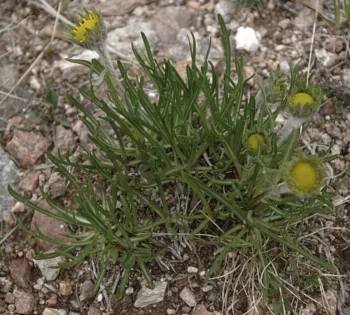
Brandegee’s Four-Nerve Daisy: A Hidden Gem for Mountain Gardens
If you’re looking for a tough, beautiful native plant that can handle challenging conditions while providing a spectacular show of golden blooms, let me introduce you to Brandegee’s four-nerve daisy (Tetraneuris brandegeei). This hardy perennial might not be a household name, but it deserves a spot in every high-altitude garden.
What Is Brandegee’s Four-Nerve Daisy?
Brandegee’s four-nerve daisy is a native perennial forb that forms attractive, low-growing cushions topped with cheerful yellow daisy-like flowers. As a forb, it’s an herbaceous plant without woody stems, making it perfect for gardeners who want the reliability of a perennial without the bulk of shrubs or trees.
You might also see this plant listed under its botanical synonyms Hymenoxys brandegeei or Rydbergia brandegeei in older gardening references, but they’re all the same delightful plant.
Where Does It Come From?
This mountain native calls the southwestern United States home, specifically thriving in Arizona, Colorado, and New Mexico. It’s perfectly adapted to high-elevation environments where many other plants struggle to survive.
- Species observed
- No observations
Why You’ll Want This Plant in Your Garden
There are several compelling reasons to consider adding Brandegee’s four-nerve daisy to your landscape:
- Native benefits: As a true native plant, it supports local ecosystems and requires minimal resources once established
- Pollinator magnet: The bright yellow flowers attract native bees, butterflies, and other beneficial insects
- Low maintenance: Once established, this plant practically takes care of itself
- Drought tolerance: Perfect for water-wise gardening and xeriscaping
- Long blooming period: Provides color throughout the growing season
Perfect Garden Settings
Brandegee’s four-nerve daisy shines in specific garden types where its natural characteristics can be fully appreciated:
- Rock gardens: Its compact, cushion-forming habit makes it ideal for tucking between stones
- Alpine gardens: Naturally adapted to high-elevation conditions
- Xeriscape gardens: Excellent drought tolerance makes it perfect for water-saving landscapes
- Native plant gardens: A natural choice for supporting local wildlife
Growing Conditions and Care
The secret to success with Brandegee’s four-nerve daisy is understanding its mountain origins. Here’s what it needs to thrive:
Sunlight and Soil
This sun-lover needs full sun exposure to produce its best flower display. Plant it in well-draining soil – sandy or rocky conditions are ideal. Heavy, clay soils that hold moisture will likely cause problems.
Hardiness Zones
Brandegee’s four-nerve daisy is hardy in USDA zones 4-8, making it suitable for a wide range of mountain and northern climates. Its cold tolerance is impressive, but it may struggle in extremely hot, humid conditions.
Watering Needs
Once established, this plant is remarkably drought-tolerant. In fact, overwatering is more likely to harm it than underwatering. Water deeply but infrequently, and always ensure excellent drainage.
Planting and Care Tips
Getting started with Brandegee’s four-nerve daisy is straightforward if you follow these guidelines:
- Soil preparation: Amend heavy soils with coarse sand or gravel to improve drainage
- Planting time: Spring or early fall planting allows the best establishment
- Spacing: Allow adequate space for the plant to form its natural cushion shape
- Mulching: Use gravel mulch rather than organic mulch to prevent moisture retention
- Fertilizing: Generally unnecessary – these plants prefer lean soils
Is This Plant Right for Your Garden?
Brandegee’s four-nerve daisy is an excellent choice if you’re gardening in mountain regions, dealing with challenging growing conditions, or simply want to support native wildlife. However, it may not be the best fit for gardens in humid climates or areas with heavy, poorly-draining soils.
If you’re committed to sustainable, low-maintenance gardening and want to provide valuable resources for pollinators, this charming native deserves serious consideration. Its combination of beauty, toughness, and ecological benefits makes it a true winner for the right garden setting.
Remember, when sourcing Brandegee’s four-nerve daisy, look for plants from reputable native plant nurseries that can verify the provenance of their stock. This ensures you’re getting plants that are well-adapted to your local conditions and supports responsible horticultural practices.