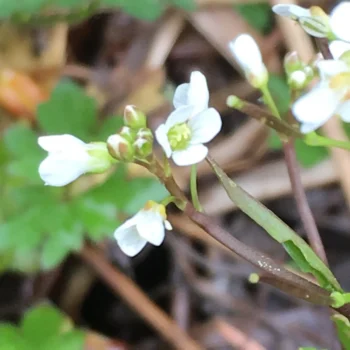
Brewer’s Bittercress: A Pacific Northwest Native Worth Knowing
If you’re passionate about native plants and live in the Pacific Northwest, you might want to get acquainted with Brewer’s bittercress (Cardamine breweri var. orbicularis). This charming little perennial forb might not be the showiest plant in your garden, but it’s got some serious native plant credentials that make it worth considering for the right spot.
What Exactly Is Brewer’s Bittercress?
Brewer’s bittercress is a native perennial forb – basically, that means it’s a soft-stemmed herbaceous plant (not woody like a shrub) that comes back year after year. As a member of the mustard family, it shares DNA with familiar garden plants like arugula and watercress, though it’s definitely more on the delicate, woodland side of the family tree.
You might also see this plant listed under its botanical synonym Cardamine orbicularis Greene in older references, but the accepted name today is Cardamine breweri var. orbicularis.
Where Does It Call Home?
This native beauty has quite a respectable range across the Pacific Northwest. You’ll find it naturally occurring in British Columbia, California, Oregon, and Washington. It’s one of those plants that truly belongs to the cool, moist regions of western North America.
- Species observed
- No observations
Should You Grow It? The Honest Truth
Here’s where things get interesting. Brewer’s bittercress has a conservation status of S5T3T4, which suggests this particular variety may face some conservation challenges in parts of its range. This doesn’t mean you shouldn’t grow it – quite the opposite! Growing native plants in gardens can actually help support their populations, but it does mean you should source your plants responsibly.
The good reasons to grow it:
- It’s a true Pacific Northwest native
- Perfect for naturalistic gardens and woodland settings
- Low-maintenance once established
- Supports the local ecosystem
- Adds authentic regional character to your landscape
Why you might want to think twice:
- Not widely available in nurseries
- Subtle beauty – not a showstopper
- Limited horticultural information available
- May require specific growing conditions
Growing Brewer’s Bittercress Successfully
Since detailed cultivation information for this specific variety is limited, your best bet is to mimic its natural habitat. Think cool, moist woodland conditions – the kind of spot where ferns feel at home.
Ideal growing conditions likely include:
- Partial to full shade
- Consistently moist, well-draining soil
- Cool temperatures (typical of Pacific Northwest climates)
- Protection from harsh afternoon sun
As a perennial forb, it should return reliably each year once established, though it may die back to the ground in winter and emerge fresh in spring.
Where It Fits in Your Garden
Brewer’s bittercress isn’t going to be the star of your flower border, but it could be perfect for:
- Native plant gardens focused on regional species
- Woodland gardens and shady naturalistic areas
- Rain gardens and moisture-loving plant communities
- Educational gardens showcasing local flora
- Restoration projects in appropriate habitats
The Bottom Line
Brewer’s bittercress is definitely a plant for the native plant enthusiast rather than the casual gardener. If you’re passionate about growing true Pacific Northwest natives and have the right shady, moist conditions, it could be a wonderful addition to your collection.
Just remember to source your plants from reputable native plant nurseries or responsibly collected seed, given its conservation status. And if you can’t find this specific variety, don’t worry – there are other Cardamine species that might be more readily available and equally valuable for supporting your local ecosystem.
Sometimes the most rewarding native plants are the quiet ones that connect us deeply to the unique character of our region. Brewer’s bittercress might just be one of those special plants worth seeking out.