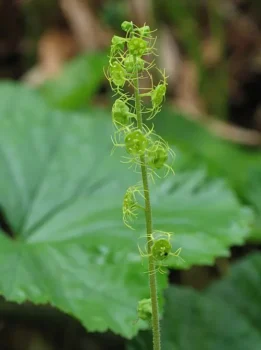
Brewer’s Miterwort: A Delicate Native Gem for Your Shade Garden
If you’re looking for a charming native perennial that thrives in those tricky shady spots, let me introduce you to Brewer’s miterwort (Mitella breweri). This understated beauty might not win any flashy flower contests, but it’s got a quiet elegance that makes it a wonderful addition to woodland gardens and naturalistic landscapes.
What Makes Brewer’s Miterwort Special?
Brewer’s miterwort is a native North American perennial that belongs to the saxifrage family. As a true native, it’s perfectly adapted to western climates and plays well with other indigenous plants. This herbaceous perennial typically grows 6-18 inches tall, forming neat clumps of heart-shaped leaves that serve as an attractive groundcover even when the plant isn’t blooming.
The real magic happens in late spring to early summer when delicate white flowers appear on slender, upright stems. These tiny blooms might look simple at first glance, but take a closer look—each flower resembles a miniature bishop’s cap or miter (hence the name miterwort), with fringed petals that give them an almost lacy appearance.
Where Does It Grow Naturally?
Brewer’s miterwort is native to western North America, naturally occurring across Alberta, British Columbia, California, Idaho, Montana, Nevada, Oregon, and Washington. In the wild, you’ll typically find it growing in moist, shaded areas like forest understories, streamside locations, and rocky slopes with good drainage.
- Species observed
- No observations
Why Grow Brewer’s Miterwort in Your Garden?
Here are some compelling reasons to consider this native charmer:
- Native plant benefits: Supports local ecosystems and requires less water once established
- Shade tolerance: Thrives in partial to full shade where many other plants struggle
- Low maintenance: Once established, it’s quite self-sufficient
- Pollinator friendly: The small flowers attract beneficial insects like small bees and flies
- Groundcover potential: Forms attractive clumps that help suppress weeds
- Four-season interest: Heart-shaped leaves provide structure even after flowers fade
Perfect Garden Settings
Brewer’s miterwort shines in several garden styles:
- Woodland gardens: Pairs beautifully with ferns, wild ginger, and other shade-loving natives
- Rock gardens: Excellent for tucking into shaded crevices and slopes
- Native plant gardens: A must-have for authentic regional plant communities
- Shade borders: Creates subtle texture and seasonal interest
- Naturalistic landscapes: Perfect for creating that wild look
Growing Conditions and Care
The good news is that Brewer’s miterwort isn’t particularly fussy, but it does have some preferences:
Light: Partial to full shade is ideal. It can handle some morning sun but appreciates protection during the hottest part of the day.
Soil: Well-draining soil that stays consistently moist is key. It’s somewhat adaptable but prefers slightly acidic to neutral pH.
Water: Regular watering during dry spells, especially in the first year. Its facultative wetland status means it can handle both moist and moderately dry conditions once established.
Climate: Hardy in USDA zones 4-8, making it suitable for most temperate gardens.
Planting and Care Tips
- Best planting time: Spring after the last frost, or early fall
- Spacing: Plant 12-18 inches apart to allow for natural spreading
- Mulching: Apply a 2-3 inch layer of organic mulch to retain moisture and suppress weeds
- Fertilizing: Generally unnecessary—too much fertilizer can actually reduce flowering
- Division: Can be divided every 3-4 years in spring or fall if desired
- Winter care: Leave foliage intact through winter for natural protection
A Few Things to Consider
While Brewer’s miterwort is generally easy-going, keep these points in mind:
- It’s not the fastest spreader, so patience is required for groundcover applications
- May go dormant in very hot, dry summers—this is normal
- Flowers are small and subtle—not the choice for dramatic color displays
- Availability can be limited at mainstream nurseries; check with native plant specialists
The Bottom Line
Brewer’s miterwort might not be the showiest plant in your garden, but it’s exactly the kind of reliable, native performer that creates the backbone of a sustainable landscape. If you have shady spots that need a touch of delicate beauty and you appreciate plants with subtle charm, this native gem deserves a spot in your garden. Plus, you’ll be supporting local wildlife and creating habitat that’s been part of western ecosystems for thousands of years—and that’s pretty special in my book!