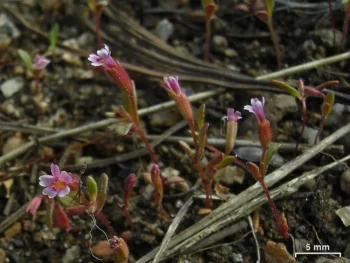
Brewer’s Monkeyflower: A Charming Native Annual for Western Gardens
If you’re looking to add a splash of delicate color to your native garden while supporting local wildlife, Brewer’s monkeyflower (Mimulus breweri) might just be the perfect addition to your landscape. This petite annual wildflower brings both beauty and ecological value to gardens across the western United States and Canada.
What Makes Brewer’s Monkeyflower Special?
Brewer’s monkeyflower is a charming native annual that typically grows just 2-8 inches tall, making it perfect for those hard-to-fill spaces in rock gardens or as a delicate ground cover. Despite its small stature, this little forb packs a punch with its tubular pink to purple flowers that seem to grin like tiny monkey faces – hence the monkeyflower name that’s both endearing and memorable.
As a true native plant, Brewer’s monkeyflower is perfectly adapted to western growing conditions and requires minimal intervention once established. It’s also known by its scientific synonyms Eunanus breweri and Mimulus rubellus var. breweri, though most gardeners will simply fall in love with its common name.
Where Does It Grow Naturally?
This delightful native calls a vast swath of western North America home, naturally occurring across Alberta, British Columbia, California, Colorado, Idaho, Montana, Nevada, Oregon, Utah, Washington, and Wyoming. Its wide distribution speaks to its adaptability and resilience – qualities that make it an excellent choice for native gardeners.
- Species observed
- No observations
Perfect Spots for Planting
Brewer’s monkeyflower shines in several garden settings:
- Rock gardens where its compact size won’t be overwhelmed by larger plants
- Alpine and mountain gardens that mimic its natural habitat
- Xeriscape designs focused on water-wise landscaping
- Native plant gardens aimed at supporting local ecosystems
- Naturalized areas where it can self-seed and create informal colonies
Its classification as Facultative Upland means it typically prefers well-drained, non-wetland conditions, though it can occasionally tolerate some moisture. This makes it versatile enough for most garden situations while still maintaining its preference for drier conditions.
Growing Conditions and Care
One of the best things about Brewer’s monkeyflower is how low-maintenance it can be when grown in appropriate conditions. Here’s what this little native prefers:
- Sunlight: Full sun to partial shade
- Soil: Well-draining soils; avoid constantly wet conditions
- Water: Dry to moderate moisture; drought-tolerant once established
- Climate: Hardy in USDA zones 4-9
Planting and Propagation Tips
Since Brewer’s monkeyflower is an annual, you’ll need to replant it each year or allow it to self-seed naturally. Here are some tips for success:
- Direct seed in fall for spring germination, or plant in early spring
- Scatter seeds on prepared soil surface and lightly rake in
- Keep soil lightly moist until germination occurs
- Once established, reduce watering to encourage drought tolerance
- Allow some plants to go to seed for natural reseeding
Benefits for Wildlife and Pollinators
While small in stature, Brewer’s monkeyflower provides valuable nectar for native pollinators including small bees, butterflies, and other beneficial insects. By choosing this native annual over non-native alternatives, you’re providing food sources that local wildlife has evolved alongside for thousands of years.
Is Brewer’s Monkeyflower Right for Your Garden?
Consider adding Brewer’s monkeyflower to your garden if you:
- Want to support native pollinators and wildlife
- Enjoy delicate, small-scale plants with charming flowers
- Need a low-maintenance annual for rock gardens or dry areas
- Are creating a native plant garden focused on western species
- Appreciate plants that can naturalize and self-seed
This little native might not be the showiest plant in your garden, but it offers the quiet satisfaction that comes from growing something perfectly adapted to your local environment. Plus, there’s something wonderfully rewarding about watching tiny monkey faces peek out from between rocks in your garden, knowing you’ve created habitat for the creatures that call your region home.