Brigantiaea Lichen: A Natural Air Quality Indicator in Your Garden
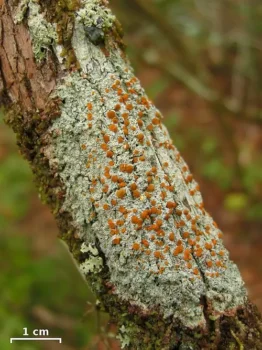
Have you ever noticed pale, crusty patches growing on the bark of trees in your yard and wondered what they were? You might be looking at brigantiaea lichen (Brigantiaea leucoxantha), a fascinating organism that’s actually doing your garden a favor by indicating clean, healthy air quality.
What Exactly Is Brigantiaea Lichen?
Brigantiaea lichen isn’t a plant in the traditional sense – it’s actually a unique partnership between fungi and algae working together as one organism. This collaborative relationship, called symbiosis, allows lichens to thrive in places where neither partner could survive alone. The fungal component provides structure and protection, while the algae produce food through photosynthesis.
This particular lichen species is native to North America and has been quietly decorating our trees for centuries. You might also see it listed under its scientific synonym, Lopadium leucoxanthum, in older field guides.
Where You’ll Find This Lichen
Brigantiaea leucoxantha makes its home primarily in the eastern regions of North America, where it thrives in temperate forest environments. It’s particularly fond of mature deciduous and mixed forests, where it can find the perfect tree bark real estate to call home.
Spotting Brigantiaea Lichen in Your Garden
Identifying this lichen is fairly straightforward once you know what to look for:
- Forms whitish to pale yellow, crusty patches on tree bark
- Has a somewhat rough, granular texture
- Typically grows in irregular, spreading patches
- Prefers the bark of hardwood trees like oaks, maples, and hickories
- Usually found on the trunk and larger branches
Is It Good for Your Garden?
Absolutely! Finding brigantiaea lichen in your garden is actually fantastic news. Here’s why you should be happy to see it:
Air Quality Champion: Lichens are incredibly sensitive to air pollution, particularly sulfur dioxide and other airborne toxins. The presence of brigantiaea lichen indicates that your local air quality is good – think of it as nature’s own air quality monitor.
Ecosystem Health Indicator: A garden with healthy lichen populations suggests a balanced, thriving ecosystem. These organisms contribute to the overall biodiversity of your space without competing with your plants for resources.
Natural Beauty: Many gardeners appreciate the aged, natural look that lichens give to mature trees. They add character and a sense of established wilderness to any landscape.
The Hands-Off Approach
Here’s the thing about lichens – you can’t plant them, and you really don’t need to manage them. They’re completely independent operators that will appear naturally when conditions are right. Trying to remove them is unnecessary and could actually harm your trees, as aggressive scraping can damage bark.
If you’re hoping to encourage lichen growth in your garden, the best approach is to:
- Maintain good air quality by avoiding pesticides and chemicals when possible
- Allow trees to mature naturally without excessive pruning
- Avoid using pressure washers or harsh cleaning methods on tree bark
- Be patient – lichens grow very slowly and may take years to establish
Common Concerns
Some gardeners worry that lichens might harm their trees, but this concern is unfounded. Lichens are not parasites – they don’t take nutrients from trees or cause damage. They simply use the bark as a surface to grow on, much like how moss might grow on a rock. In fact, their presence often indicates that your trees are healthy and the environment is clean.
If you notice brigantiaea lichen in your garden, consider yourself lucky. You’re witnessing a remarkable example of nature’s cooperation, and your trees are wearing a badge of honor that says clean air lives here. Rather than trying to remove or manage these fascinating organisms, simply enjoy them as a sign that your garden ecosystem is thriving.