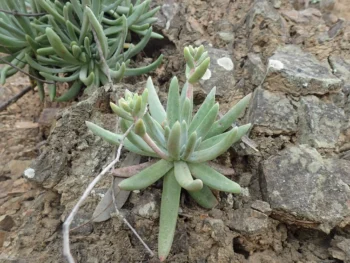
Bright Green Dudleya: A Rare California Native Worth Growing
If you’re looking to add some serious succulent charm to your California garden while supporting native biodiversity, the bright green dudleya (Dudleya virens hassei) might just be your new favorite plant. This stunning perennial succulent is as beautiful as it is ecologically important, though its rarity makes it a special addition that requires some thoughtful consideration.
What Makes Bright Green Dudleya Special?
Also known by its synonyms Dudleya hassei or Stylophyllum hassei, this native California succulent lives up to its common name with gorgeous bright green rosettes of thick, fleshy leaves. As a perennial forb (that’s garden-speak for a non-woody herbaceous plant), it brings year-round structure to your landscape without the bulk of shrubs or trees.
What really sets this dudleya apart is its native heritage. Unlike many popular succulents that hail from distant continents, bright green dudleya evolved right here in California, making it perfectly adapted to our unique climate and an important part of local ecosystems.
Where Does It Come From?
Bright green dudleya is native to California, where it naturally occurs along coastal areas and on the Channel Islands. This limited geographic distribution is part of what makes it so special – and so rare.
- Species observed
- No observations
A Word About Rarity
Here’s something important to know: bright green dudleya has a conservation status of S2?T2?, which indicates it’s considered uncommon to rare. This means if you want to grow this beauty, you’ll need to be extra responsible about sourcing. Always purchase from reputable native plant nurseries that propagate their own plants rather than collecting from wild populations. Never collect plants from the wild yourself – it’s both illegal and harmful to already vulnerable populations.
Why Grow Bright Green Dudleya?
Despite its rarity (or perhaps because of it), there are compelling reasons to include this native succulent in your garden:
- Supports local pollinators with its attractive flower spikes
- Requires minimal water once established, perfect for drought-conscious gardening
- Provides year-round visual interest with its distinctive rosette form
- Helps preserve California’s native plant heritage
- Naturally adapted to local climate conditions
Perfect Garden Settings
Bright green dudleya shines in several garden styles:
- Mediterranean and xeriscape gardens
- Coastal landscapes
- Rock gardens and succulent collections
- Native plant gardens
- Container gardens (with excellent drainage)
Use it as an accent plant or group several together for dramatic impact. Its compact rosette form makes it excellent for adding texture contrast alongside other native plants.
Growing Conditions and Care
Like most California natives, bright green dudleya is refreshingly low-maintenance once you understand its needs:
Climate: Hardy in USDA zones 9-11, making it suitable for most of California’s milder regions.
Light: Prefers full sun to partial shade. In inland areas, some afternoon shade can help prevent stress during extreme heat.
Soil: The golden rule with dudleyas is drainage, drainage, drainage! They need fast-draining soil and will quickly rot in soggy conditions. Sandy or rocky soils work best.
Water: Once established, this drought-tolerant native needs very little supplemental water. Water deeply but infrequently, allowing soil to dry completely between waterings.
Planting and Care Tips
- Plant in fall for best establishment before summer heat
- Amend heavy clay soils with coarse sand or pumice to improve drainage
- Avoid overhead watering, which can cause crown rot
- Mulch lightly with gravel or small stones rather than organic mulch
- Protect from hard frost in borderline climate zones
- Remove spent flower stalks to maintain appearance
The beauty of growing native plants like bright green dudleya is that once they’re established in the right conditions, they largely take care of themselves. No fussy feeding schedules or constant attention required – just the occasional check to ensure they’re happy and healthy.
By choosing to grow this rare California native, you’re not just adding beauty to your garden – you’re participating in conservation efforts and supporting the pollinators and wildlife that depend on native plants. Just remember to source responsibly, and you’ll have a stunning, sustainable addition to your landscape that connects you directly to California’s natural heritage.