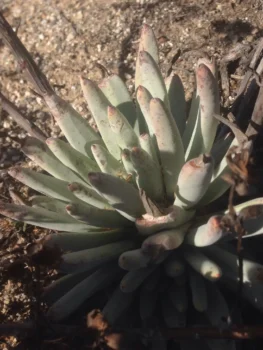
Bright Green Dudleya: A Rare Gem for Your Drought-Tolerant Garden
Meet the bright green dudleya (Dudleya virens insularis), a stunning succulent that’s as charming as it is elusive. This perennial beauty brings a splash of vibrant green to your garden while supporting California’s native ecosystem. But before you rush to plant one, there’s something important you should know about this special little plant.
A California Channel Islands Native
The bright green dudleya is a true California native, calling the Golden State home exclusively. More specifically, this rare succulent is endemic to California’s Channel Islands, where it has evolved to thrive in coastal conditions. Its natural habitat gives us clues about how to grow it successfully in our own gardens.
- Species observed
- No observations
Why This Plant Deserves Special Attention
Here’s where things get interesting – and important. The bright green dudleya has a Global Conservation Status of S2?T2, which means it’s considered rare and potentially vulnerable. This isn’t just another garden plant; it’s a special piece of California’s natural heritage that deserves our respect and protection.
Important note: If you’re considering adding this beauty to your garden, please make sure you source it responsibly from reputable nurseries that propagate their own plants rather than collecting from wild populations.
What Makes It Garden-Worthy
Despite its rarity – or perhaps because of it – the bright green dudleya offers some compelling reasons to include it in your landscape:
- Stunning architectural form with bright green, fleshy rosettes
- Produces elegant tall flower spikes with delicate white to pale yellow blooms
- Extremely drought-tolerant once established
- Supports native pollinators like bees during flowering season
- Low-maintenance and deer-resistant
- Perfect for water-wise gardening initiatives
Perfect Garden Settings
This charming succulent shines brightest in:
- Rock gardens and succulent collections
- Mediterranean-style landscapes
- Coastal gardens (it loves that ocean influence!)
- Container gardens and patio displays
- Xeriscaped areas designed for water conservation
Growing Conditions and Care
The bright green dudleya isn’t particularly fussy, but it does have some specific preferences rooted in its island heritage:
Climate: Thrives in USDA hardiness zones 9-11. It’s frost-sensitive, so if you’re in a cooler area, container growing might be your best bet.
Light: Enjoys full sun to partial shade, though some afternoon protection in very hot climates is appreciated.
Soil: This is crucial – excellent drainage is non-negotiable! Sandy, rocky, or amended clay soils work well, but avoid heavy, water-retentive soils that can cause root rot.
Water: Once established, this drought champion needs very little supplemental watering. Water deeply but infrequently, and always allow soil to dry between waterings.
Planting and Care Tips
Ready to give this rare beauty a home? Here’s how to set it up for success:
- Plant in spring when temperatures are mild and stable
- Ensure your planting site has perfect drainage – consider raised beds or containers if your soil is heavy
- Space plants appropriately to allow for air circulation
- Water sparingly during the first growing season, then reduce further once established
- Protect from hard frost with covering or by moving containers indoors
- Remove spent flower stalks to maintain plant energy
A Plant with Purpose
By choosing to grow bright green dudleya responsibly, you’re doing more than just adding a beautiful plant to your garden. You’re participating in conservation efforts, supporting native California ecosystems, and creating habitat for local pollinators. Plus, you’ll have a conversation starter that’s sure to impress fellow garden enthusiasts!
Remember, the key to success with this special succulent lies in respecting both its needs and its conservation status. Source responsibly, provide excellent drainage, and enjoy watching this rare gem thrive in your drought-tolerant garden space.