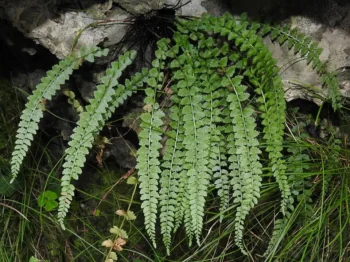
Brightgreen Spleenwort: A Mysterious Native Fern Worth Knowing
Meet the brightgreen spleenwort (Asplenium trichomanesramosum), a perennial native fern that’s managed to keep a relatively low profile in the gardening world. While this little-known species might not be the star of your local nursery, it represents an intriguing piece of North America’s native flora puzzle.
Where You’ll Find This Elusive Native
The brightgreen spleenwort has one of the most impressive native ranges you’ll encounter. This hardy fern calls home an extensive territory spanning from Alaska down through the western United States, across the northern states, and into eastern Canada. You can find it growing wild in:
- Alaska and western Canada (Alberta, British Columbia, Yukon, Northwest Territories)
- Western U.S. states including California, Colorado, Idaho, Montana, Nevada, Oregon, Utah, Washington, and Wyoming
- Northern and eastern regions including Maine, Michigan, New York, South Dakota, Vermont, and Wisconsin
- Eastern Canada provinces like New Brunswick, Nova Scotia, Ontario, Quebec, and Newfoundland and Labrador
- Even reaching into Greenland’s harsh climate
- Species observed
- No observations
The Mystery Factor
Here’s where things get interesting – and a bit frustrating for curious gardeners. Despite its widespread native range, detailed information about the brightgreen spleenwort is surprisingly scarce. This could mean it’s either extremely rare, easily confused with other spleenwort species, or simply hasn’t received much attention from botanists and horticulturists.
What We Do Know
As a perennial fern, the brightgreen spleenwort would theoretically return year after year once established. Like other members of the Asplenium genus, it’s likely a small to medium-sized fern that prefers rocky habitats, crevices, or shaded woodland areas.
The name spleenwort comes from historical medicinal uses – these ferns were once believed to cure ailments of the spleen. While we don’t recommend testing those old remedies, the name gives us a glimpse into this plant’s cultural history.
Should You Grow It?
This is where things get tricky. Given the lack of available information about cultivation requirements, growing conditions, and even basic plant characteristics, the brightgreen spleenwort isn’t exactly beginner-friendly. Additionally, its potential rarity means you’re unlikely to find it at your local garden center.
If you’re determined to include native spleenworts in your garden, consider these better-documented alternatives:
- Maidenhair spleenwort (Asplenium trichomanes) – widely available and well-understood
- Ebony spleenwort (Asplenium platyneuron) – excellent for rock gardens
- Walking fern (Asplenium rhizophyllum) – unique and conversation-starting
The Responsible Approach
If you do encounter the brightgreen spleenwort in the wild, resist the urge to dig it up. Without knowing its conservation status, it’s best to admire it from a distance and perhaps snap a photo to share with local botanists or native plant societies. They’d probably be thrilled to document its location!
Contributing to Plant Knowledge
Sometimes the most valuable thing gardeners can do is become citizen scientists. If you suspect you’ve found this species in your area, consider reaching out to:
- Your state’s native plant society
- Local university extension programs
- Regional herbarium collections
- iNaturalist or other plant identification apps
Who knows? You might help fill in some of those mysterious gaps in our knowledge about this enigmatic native fern. After all, every plant has a story – some are just waiting for the right person to help tell it.