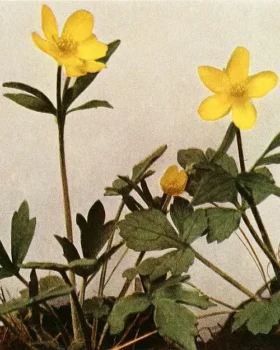
Bristly Buttercup: A Cheerful Native Groundcover for Shady Spots
Looking for a native plant that brings sunny yellow blooms to your garden’s shadier corners? Meet the bristly buttercup (Ranunculus hispidus), a delightful perennial that might just become your new favorite groundcover. Don’t let the word bristly scare you off – this charming wildflower is actually quite well-behaved and perfect for gardeners who want to add early spring color while supporting local ecosystems.
What Makes Bristly Buttercup Special?
This native North American beauty is a true perennial that comes back year after year, slowly spreading to create a lovely carpet of deeply divided, palmate leaves topped with bright yellow, five-petaled flowers. Growing to about 2.5 feet tall at maturity, it has a single-stem growth form that creates an upright yet graceful presence in the garden.
As a forb (a non-woody flowering plant), bristly buttercup lacks significant woody tissue but makes up for it with rapid spring growth and eye-catching yellow blooms that appear in early spring when many other plants are still sleeping.
Where Does It Call Home?
Bristly buttercup is impressively widespread across North America, naturally occurring throughout the eastern United States and southeastern Canada. You’ll find it thriving from Maine down to Florida, west to the Great Plains, and up into Canadian provinces including Manitoba, Ontario, Quebec, and the Maritime provinces. This extensive native range speaks to its adaptability and resilience.
- Species observed
- No observations
Why Garden with Bristly Buttercup?
There are several compelling reasons to consider adding this native charmer to your landscape:
- Early pollinator support: Those cheerful yellow flowers provide crucial nectar for early-emerging bees, flies, and other pollinators when few other food sources are available
- Shade tolerance: Unlike many flowering plants, bristly buttercup actually tolerates shade well, making it perfect for woodland gardens
- Low maintenance: Once established, it requires minimal care and has moderate drought tolerance
- Native ecosystem support: As a native species, it naturally fits into local food webs and supports wildlife
- Versatile moisture needs: Its facultative wetland status means it can handle both moist and drier conditions
Perfect Garden Roles
Bristly buttercup shines in several landscape situations:
- Woodland gardens: Its shade tolerance makes it ideal under trees
- Rain gardens: Can handle varying moisture levels
- Naturalized areas: Creates beautiful drifts in meadow-style plantings
- Native plant gardens: A must-have for authentic regional landscapes
- Groundcover: Slowly spreads to fill in bare spots
Growing Conditions and Care
The good news? Bristly buttercup is fairly easy to please. Here’s what it needs to thrive:
Soil: Prefers fine to medium-textured soils with high fertility. It’s quite flexible with pH, tolerating anything from 4.5 to 8.0, though it appreciates rich, organic matter.
Moisture: Medium moisture use with low drought tolerance means it prefers consistently moist (but not waterlogged) conditions.
Light: Shade tolerant! This makes it valuable for spots where sun-loving plants struggle.
Climate: Hardy in USDA zones 3-8, tolerating temperatures down to -33°F. It needs at least 130 frost-free days and annual precipitation between 34-68 inches.
Planting and Propagation
Getting started with bristly buttercup is straightforward:
- From seed: The primary propagation method, with about 25,000 seeds per pound. Seeds don’t require cold stratification
- Planting density: Space plants 10,912 to 43,560 per acre depending on desired coverage speed
- Timing: Plant in early spring for best establishment
- Germination: Seeds have medium vigor and slow spread rate, so patience is key
- From sprigs: Can also be propagated vegetatively, though it doesn’t spread rapidly on its own
A Few Considerations
While bristly buttercup is generally well-behaved, keep these points in mind:
- Growth rate is rapid in spring but slows after harvest or cutting
- No significant fire resistance, so protect in fire-prone areas
- Foliage isn’t particularly showy in fall
- Root depth is relatively shallow at minimum 4 inches
- Like many buttercups, it’s not recommended for livestock grazing areas
The Bottom Line
Bristly buttercup deserves a spot in gardens throughout its native range. It offers early spring beauty, supports pollinators, tolerates challenging shady conditions, and requires minimal maintenance once established. For native plant enthusiasts looking to fill difficult spots with cheerful yellow blooms, this adaptable perennial is definitely worth considering.
Whether you’re creating a woodland garden, establishing a rain garden, or simply want to support local pollinators with early nectar sources, bristly buttercup brings both beauty and ecological value to the landscape. Give it a try – your garden (and local bees) will thank you!