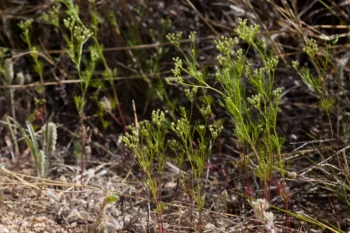
Bristly Scaleseed: A Delicate Native Wildflower for Natural Gardens
If you’re looking to add some understated charm to your native plant garden, bristly scaleseed (Spermolepis echinata) might just be the perfect addition. This petite annual wildflower may not win any showiest bloom contests, but what it lacks in flashiness, it makes up for in ecological value and easy-going nature.
What is Bristly Scaleseed?
Bristly scaleseed is a native annual forb—basically a non-woody flowering plant that completes its life cycle in one growing season. As a member of the carrot family, it produces tiny white flowers arranged in delicate, umbrella-like clusters called umbels. The plant gets its common name from its small, bristly seeds that have a distinctive scale-like appearance.
This native wildflower is also known by its botanical name Spermolepis echinata, and you might occasionally see it listed under its synonym Apium echinatum in older plant references.
Where Does Bristly Scaleseed Grow?
One of the best things about bristly scaleseed is its impressive native range. This adaptable little plant calls home to a whopping 20 states across the southern and central United States, including Alabama, Arizona, Arkansas, California, Florida, Georgia, Illinois, Kansas, Kentucky, Louisiana, Mississippi, Missouri, New Mexico, New York, North Carolina, Oklahoma, South Carolina, Tennessee, Texas, and Virginia.
- Species observed
- No observations
The plant is typically found in USDA hardiness zones 4-9, making it suitable for a wide variety of climates across its native range.
Why Grow Bristly Scaleseed?
While bristly scaleseed might seem like a humble choice, there are several compelling reasons to include it in your native garden:
- True native credentials: Supporting local ecosystems with plants that naturally belong
- Low maintenance: Once established, it pretty much takes care of itself
- Pollinator support: The small white flowers attract beneficial insects like tiny native bees and flies
- Self-sowing capability: Creates natural drifts and fills in gaps without your help
- Adaptable nature: Tolerates various growing conditions
Garden Design and Landscape Uses
Bristly scaleseed works beautifully as a supporting player in naturalized plantings. It’s particularly well-suited for:
- Prairie restorations and wildflower meadows
- Native plant borders
- Butterfly and pollinator gardens
- Areas where you want a natural, meadow-like appearance
- Filling in gaps between larger perennials
Think of it as nature’s confetti—it sprinkles itself throughout the garden, adding texture and delicate interest without overwhelming showier plants.
Growing Conditions and Care
The beauty of bristly scaleseed lies in its adaptability. This plant has a facultative upland wetland status across all regions, which means it usually prefers non-wetland conditions but can tolerate some moisture variation—basically, it’s not too picky about water levels.
Here’s what bristly scaleseed prefers:
- Sunlight: Full sun to partial shade
- Soil: Adaptable to various soil types, though well-draining soil is preferred
- Water: Drought-tolerant once established, but appreciates regular moisture during germination
- Maintenance: Minimal—this is definitely a plant it and forget it species
Planting and Propagation Tips
Growing bristly scaleseed is refreshingly straightforward:
- From seed: The easiest method—direct sow in fall or early spring
- Germination: Seeds need light to germinate, so barely cover them with soil
- Spacing: Don’t worry too much about spacing—let nature decide where it wants to grow
- Self-seeding: Allow some plants to go to seed for natural reseeding
Potential Drawbacks to Consider
Let’s be honest—bristly scaleseed isn’t for everyone. Here are a few things to keep in mind:
- It’s quite small and can get lost among larger, showier plants
- As an annual, it will die back each year (though it self-seeds readily)
- The flowers are tiny and won’t provide dramatic visual impact
- It can self-seed enthusiastically, which some gardeners might consider weedy
The Bottom Line
Bristly scaleseed is perfect for gardeners who appreciate the subtle beauty of native wildflowers and want to create habitat for small pollinators. It’s an excellent choice for naturalized areas, prairie restorations, or anywhere you want to add native plant diversity without much fuss.
While it won’t be the star of your garden, bristly scaleseed serves as a wonderful supporting cast member, providing ecological benefits and delicate beauty that enhances rather than competes with your showier native plants. Plus, with its impressive native range and easy-going nature, it’s a great way to connect your garden to the broader landscape—and that’s something worth celebrating.