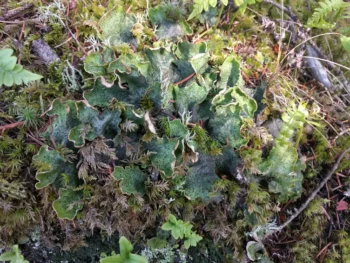
British Felt Lichen: A Fascinating Garden Visitor You Can’t Plant
Have you ever spotted something gray-green and leafy-looking growing on the ground in your shaded garden areas and wondered what it might be? If you’re in a northern climate, there’s a good chance you’ve encountered the British felt lichen (Peltigera britannica), one of nature’s most interesting collaborative organisms.
What Exactly Is British Felt Lichen?
Despite its name suggesting it’s a plant, British felt lichen is actually a fascinating partnership between a fungus and algae living together in perfect harmony. This native North American species belongs to the world of lichens – organisms that blur the lines between the plant and fungal kingdoms. The felt part of its name comes from its distinctive texture, which feels somewhat like soft, natural felt fabric.
Where You’ll Find This Northern Beauty
British felt lichen calls the northern regions of North America home, thriving in boreal and subarctic climates where cool, moist conditions prevail. You’re most likely to spot it in northern states and Canadian provinces, particularly in areas with long, cold winters and relatively cool summers.
Identifying British Felt Lichen
Recognizing British felt lichen is easier than you might think once you know what to look for:
- Color ranges from gray-green to brownish, often with a silvery sheen
- Grows in distinctive lobed patterns that spread outward
- Has a soft, felt-like texture (hence the name!)
- Typically found growing on soil, moss, or decaying organic matter
- Prefers shaded, moist locations under trees or in forest clearings
- Forms patches that can spread several inches across
Is British Felt Lichen Good for Your Garden?
While you can’t exactly plant British felt lichen like you would a perennial, its presence in your garden is actually a wonderful sign! Lichens are incredibly sensitive to air pollution, so finding them indicates that your local air quality is relatively good. Think of them as nature’s air quality monitors.
British felt lichen also plays several beneficial roles in garden ecosystems:
- Helps prevent soil erosion with its spreading growth pattern
- Contributes to soil formation by slowly breaking down organic matter
- Provides shelter for tiny insects and other small creatures
- Adds interesting texture and color to natural garden areas
Creating Conditions Where British Felt Lichen Might Appear
You can’t plant British felt lichen, but you can create conditions that might encourage its natural appearance if you live within its native range. This lichen thrives in:
- Cool, consistently moist environments
- Partial to full shade
- Areas with good air circulation but protection from harsh winds
- Locations with organic matter like leaf litter or decaying wood
- Spots away from foot traffic and disturbance
Caring for British Felt Lichen (The Hands-Off Approach)
The best thing you can do for British felt lichen is to leave it alone! These remarkable organisms have very specific requirements and don’t respond well to traditional gardening interventions. If you’re lucky enough to have it appear naturally in your garden:
- Avoid walking on or disturbing the areas where it grows
- Don’t apply fertilizers or chemicals nearby
- Maintain natural moisture levels – avoid overwatering or letting areas dry out completely
- Keep the area relatively undisturbed by garden maintenance
The Bottom Line
British felt lichen isn’t something you can add to your shopping list at the garden center, but it’s definitely something to appreciate if it shows up in your northern garden naturally. Consider it a badge of honor – a sign that your garden provides the kind of clean, undisturbed habitat that these sensitive organisms need to thrive. Rather than trying to cultivate it, focus on creating and maintaining the kind of natural, low-impact garden spaces where such fascinating organisms can flourish on their own terms.