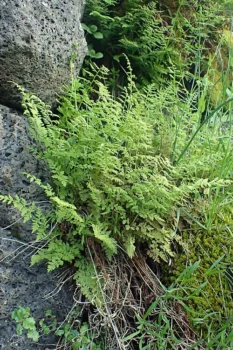
Brittle Bladderfern: A Delicate Native Beauty for Shady Corners
If you’ve ever wandered through a rocky woodland and spotted tiny, lacy ferns tucked into crevices, you’ve likely encountered the charming brittle bladderfern (Cystopteris fragilis). This delicate native fern might be small in stature, but it packs a big punch when it comes to adding texture and natural beauty to your garden’s shadier spots.
What Makes This Fern Special?
Don’t let the name brittle fool you into thinking this fern is fragile in the garden. While its fronds are indeed delicate to the touch and can break easily when handled, this perennial fern is surprisingly tough and adaptable. Its scientific name, Cystopteris fragilis, literally means bladder fern fragile, referring to the bladder-like coverings (indusia) that protect its spores.
This little gem typically grows just 4-12 inches tall, making it perfect for tucking into small spaces where larger ferns might overwhelm. The fronds are triangular and finely divided, creating an almost lacy appearance that adds wonderful texture contrast to broader-leaved plants.
A True North American Native
Brittle bladderfern is a proud native across an impressive range of North American territories and states. You’ll find it naturally growing from Alaska down through Canada and across most of the lower 48 states, from coast to coast. It’s native to states as diverse as California, Texas, Maine, and North Carolina, making it a fantastic choice for gardeners throughout most of the continent.
- Species observed
- No observations
Perfect Spots in Your Garden
This fern shines in several garden scenarios:
- Rock gardens: Its natural habitat includes rocky crevices, so it’s right at home among stones
- Shade gardens: Perfect for those tricky spots under trees where grass won’t grow
- Woodland gardens: Adds authentic native character to naturalized areas
- Border edging: Creates a soft, delicate border along shaded pathways
Growing Conditions That Make It Happy
Brittle bladderfern is wonderfully adaptable, thriving in USDA hardiness zones 2-8. It’s classified as facultative upland across all regions, meaning it usually prefers non-wetland conditions but can tolerate some moisture.
For best results, provide:
- Light: Partial to full shade (morning sun is okay, but avoid hot afternoon sun)
- Soil: Well-draining, slightly moist soil with good organic content
- Drainage: Excellent drainage is key – this fern doesn’t like wet feet
- pH: Neutral to slightly alkaline soil (it often grows on limestone in nature)
Low-Maintenance Garden Companion
Once established, brittle bladderfern is remarkably low-maintenance. It spreads slowly through underground rhizomes and spores, eventually forming small colonies without becoming aggressive. The fronds die back in winter, returning fresh each spring.
Care tips:
- Water during dry spells, but don’t overdo it
- Add compost around plants in spring
- Leave old fronds in place until spring cleanup
- Divide clumps every few years if desired
Wildlife and Ecosystem Benefits
While ferns don’t produce flowers for pollinators, they serve important ecological roles. The fronds provide shelter for small creatures, and the spores can be food for some insects. As a native plant, it supports the local ecosystem in ways that non-native alternatives simply can’t match.
Is Brittle Bladderfern Right for Your Garden?
This fern is an excellent choice if you’re looking for:
- A true native plant that supports local ecosystems
- Low-maintenance ground cover for shaded areas
- Fine-textured foliage to contrast with hostas or other broad-leaved plants
- A plant that works well in rock gardens or naturalized areas
- Something unique that most neighbors won’t have
However, you might want to look elsewhere if you need a fast-growing ground cover or want something for full-sun locations. This fern takes its time to establish and definitely prefers the shade.
Brittle bladderfern proves that good things really do come in small packages. This native charmer brings authentic woodland beauty to your garden while supporting local wildlife – and it asks for very little in return. For gardeners wanting to incorporate more natives into their landscape, this delicate fern is definitely worth considering.