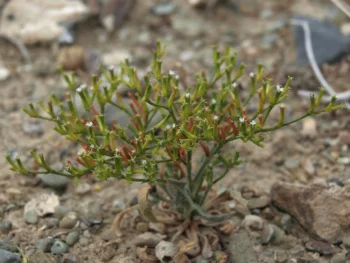
Brittle Spineflower: A Delicate Native Annual for Western Gardens
If you’re looking for a subtle, drought-tolerant native plant that supports local ecosystems without demanding much attention, brittle spineflower (Chorizanthe brevicornu var. spathulata) might just be the unsung hero your garden needs. This modest annual forb brings quiet charm and ecological value to western landscapes, though it’s definitely not your typical showy garden star.
What Makes Brittle Spineflower Special?
Brittle spineflower is a true western native, naturally occurring across California, Idaho, Nevada, and Oregon. As an annual forb, it completes its entire life cycle in one growing season, producing delicate clusters of tiny white to pinkish flowers that may not stop traffic but certainly catch the attention of small native pollinators.
This plant belongs to the buckwheat family and has several botanical synonyms you might encounter, including Chorizanthe brevicornu ssp. spathulata and Chorizanthe spathulata. Don’t let the scientific names intimidate you – brittle spineflower perfectly captures its delicate, somewhat fragile appearance.
- Species observed
- No observations
Should You Plant Brittle Spineflower?
Important Conservation Note: Before we dive into growing tips, it’s crucial to know that brittle spineflower has a conservation status that suggests some populations may be at risk. If you decide to grow this plant, please ensure you source seeds or plants from reputable native plant nurseries that collect responsibly and legally.
Here’s why you might want to consider this humble native:
- Supports local ecosystems by providing food for native pollinators
- Requires virtually no supplemental watering once established
- Thrives in poor soils where other plants struggle
- Adds authentic regional character to native plant gardens
- Perfect for naturalized landscapes and rock gardens
However, brittle spineflower isn’t for everyone. If you prefer bold, colorful displays or need plants that provide structure year-round, you might want to look elsewhere. This is definitely a plant for gardeners who appreciate subtle beauty and ecological function over flashy aesthetics.
Growing Conditions and Care
The beauty of brittle spineflower lies in its simplicity. This tough little annual has adapted to some pretty challenging conditions in the wild, which translates to easy care in the garden:
- Sunlight: Full sun is essential
- Soil: Prefers poor, sandy, or rocky soils with excellent drainage
- Water: Drought tolerant; avoid overwatering
- Climate: Best suited for USDA zones 7-10
Planting and Establishment Tips
Since brittle spineflower is an annual, you’ll be working with seeds rather than transplants. Here’s how to give them the best start:
- Direct sow seeds in fall for spring germination
- Scatter seeds on prepared soil surface – no need to bury deeply
- Choose a location with excellent drainage and poor soil
- Water lightly during germination, then reduce watering significantly
- Allow plants to self-seed for naturalized populations
Garden Design Ideas
Brittle spineflower works beautifully in:
- Native plant gardens focused on regional flora
- Rock gardens and xeriscapes
- Naturalized meadow areas
- Spaces between stepping stones or in gravel gardens
- As part of a native groundcover mix
Wildlife and Pollinator Benefits
While brittle spineflower may look unassuming, it serves as an important food source for small native bees and other tiny pollinators. These relationships have developed over thousands of years, making this plant a valuable contributor to local food webs. By including it in your landscape, you’re supporting biodiversity in ways that non-native plants simply can’t match.
The Bottom Line
Brittle spineflower isn’t going to win any beauty contests, but it offers something far more valuable: authentic regional character and ecological function with virtually no maintenance requirements. If you’re building a water-wise native garden in the western United States and you appreciate plants that work quietly behind the scenes, this delicate annual deserves consideration.
Just remember to source your seeds responsibly, respect its conservation status, and let it do what it does best – provide subtle beauty while supporting the native creatures that call your region home.