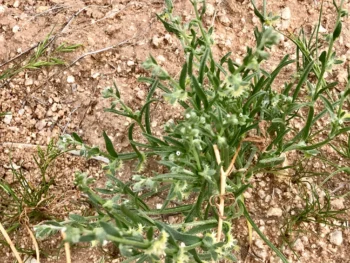
Broadfruit Combseed: A Tiny Desert Native with Big Ecological Value
Meet broadfruit combseed (Pectocarya platycarpa), a diminutive annual forb that might just be the most underappreciated native plant in the American Southwest. While it won’t win any beauty contests with its tiny white flowers, this little desert dweller packs a surprising punch when it comes to supporting local ecosystems and creating authentic native landscapes.
What Is Broadfruit Combseed?
Broadfruit combseed is an annual forb native to the southwestern United States. As a forb, it’s a non-woody plant that completes its entire life cycle in a single growing season. Don’t let its humble appearance fool you – this plant has evolved perfectly for life in some of North America’s most challenging desert environments.
You might also encounter this plant listed under its scientific synonyms, including Pectocarya gracilis var. platycarpa or Pectocarya linearis var. platycarpa, but they all refer to the same hardy little desert annual.
Where Does It Grow Naturally?
This native gem calls the American Southwest home, naturally occurring across Arizona, California, Nevada, New Mexico, Texas, and Utah. It thrives in the desert regions of these states, where it has adapted to extreme conditions that would challenge most garden plants.
- Species observed
- No observations
Should You Plant Broadfruit Combseed?
Here’s the honest truth: broadfruit combseed isn’t going to transform your garden into a showstopper. But if you’re passionate about native plants, ecological gardening, or creating habitat for wildlife, this little plant deserves serious consideration.
The Pros:
- Supports native pollinators, especially small native bees
- Requires virtually no water once established
- Helps create authentic desert ecosystems
- Self-sows readily for natural plant communities
- Perfect for naturalized areas and wildlife gardens
The Cons:
- Minimal ornamental value
- Very small, easily overlooked flowers
- Annual lifecycle means it disappears each year
- Not suitable for formal garden designs
Perfect Garden Situations
Broadfruit combseed shines in specific garden contexts:
- Desert and xeriscape gardens
- Native plant restorations
- Wildlife habitat gardens
- Naturalized areas and meadows
- Educational or demonstration gardens
Growing Conditions and Care
The beauty of broadfruit combseed lies in its simplicity. This plant thrives in USDA hardiness zones 8-10 and prefers:
- Full sun exposure
- Well-draining, sandy or rocky soils
- Minimal to no supplemental watering
- Poor to average soil fertility
Once established, this drought-tolerant native asks for almost nothing from gardeners, making it ideal for low-maintenance landscapes.
Planting and Care Tips
Growing broadfruit combseed successfully is refreshingly straightforward:
- Direct seed in fall for best germination
- Scatter seeds on prepared soil surface
- Provide minimal water during germination period
- Allow plants to self-seed for natural populations
- Avoid overwatering, which can harm desert-adapted plants
Remember, this annual will complete its life cycle and disappear each year, but if conditions are right, it will likely return from self-sown seeds.
Wildlife and Pollinator Benefits
While broadfruit combseed may look insignificant, it plays an important role in supporting native wildlife. Its small flowers attract tiny native pollinators, including specialized desert bees that have co-evolved with these plants. By including it in your garden, you’re supporting the intricate web of native species that depend on indigenous plants for survival.
The Bottom Line
Broadfruit combseed isn’t for every gardener or every garden. If you’re seeking immediate visual impact or formal beauty, you’ll want to look elsewhere. But if you’re committed to native plant gardening, supporting local ecosystems, or creating authentic desert landscapes, this humble annual deserves a spot in your garden. Sometimes the smallest plants make the biggest difference in supporting our native wildlife communities.