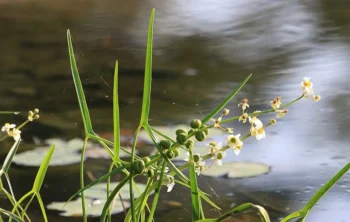
Broadleaf Arrowhead: The Perfect Native Plant for Your Water Garden
If you’re looking to add some drama and natural beauty to your water garden or soggy yard spot, let me introduce you to one of North America’s most distinctive native aquatic plants. Broadleaf arrowhead (Sagittaria latifolia) is like nature’s own sculpture, with leaves shaped exactly like medieval arrowheads pointing skyward. This perennial beauty isn’t just a pretty face—it’s a hardworking native that brings both aesthetic appeal and ecological benefits to any wetland garden.
What Makes Broadleaf Arrowhead Special?
The broadleaf arrowhead gets its name from those unmistakable arrow-shaped leaves that can grow up to 5 feet tall. But here’s where it gets interesting—this plant is like a botanical shape-shifter. Depending on water depth and growing conditions, the leaves can range from the classic broad arrowhead shape to narrow and grass-like. It’s as if the plant has its own wardrobe and dresses for the occasion!
During late spring and early summer, clusters of white, three-petaled flowers appear on tall stalks above the foliage. These cheerful blooms are like little stars dotting your water garden, and they’re not just for show—they’re pollinator magnets that attract bees, flies, and other beneficial insects to your wetland space.
Where Does It Call Home?
Talk about a well-traveled native! Broadleaf arrowhead has one of the most impressive native ranges you’ll find. This adaptable beauty calls home to virtually all of North America, from the Canadian provinces of Alberta, British Columbia, Manitoba, New Brunswick, Nova Scotia, Ontario, Prince Edward Island, Quebec, Saskatchewan, and Newfoundland, down through all the lower 48 states, and even Puerto Rico. The only place it’s not native? Hawaii, where it’s actually considered an introduced species.
- Species observed
- No observations
Why Your Garden (and Local Wildlife) Will Love It
As an obligate wetland plant, broadleaf arrowhead is Mother Nature’s way of saying this spot is meant to be wet! If you have a consistently soggy area in your yard that makes you scratch your head, this could be your answer. Rather than fighting the moisture, embrace it with this stunning native.
The plant serves as an important food source for waterfowl—ducks absolutely love the nutritious tubers that develop underground. Plus, those summer flowers provide nectar for pollinators when many other wetland plants aren’t blooming, making it a crucial resource in wetland ecosystems.
Perfect Spots for Planting
Broadleaf arrowhead shines in several garden settings:
- Water gardens and pond edges (it can grow in up to 10 inches of standing water)
- Rain gardens and bioswales
- Bog gardens and wetland restoration projects
- Natural swimming pools
- That perpetually soggy spot in your yard that nothing else will tolerate
Growing Conditions: Keep It Wet!
The secret to success with broadleaf arrowhead is simple: water, water, water. This plant has high moisture requirements and will absolutely sulk (or die) if allowed to dry out. Here’s what it needs to thrive:
- Moisture: Constantly wet to standing water up to 10 inches deep
- Soil: Adapts to fine and medium-textured soils; skip the sandy stuff
- pH: Remarkably tolerant, handling anything from 4.7 to 8.9
- Sun: Full sun preferred, though it can handle some shade (just expect less flowering)
- Hardiness: Incredibly tough, surviving in USDA zones 3-11
Planting and Care Tips
Good news for busy gardeners—broadleaf arrowhead is refreshingly low-maintenance once established. Here’s how to set it up for success:
When to Plant: Spring is your best bet, after the last frost date. The plant needs at least 95 frost-free days to complete its growing cycle.
Getting Started: You can grow this beauty from seed (there are about 67,000 seeds per pound—talk about bang for your buck!). Seeds are routinely available from native plant suppliers. No need for cold stratification or other fussy treatments.
Spacing: Give each plant about 2-3 feet of space. It grows in a bunching form rather than spreading aggressively.
Fertilization: Here’s the best part—this native has low fertility requirements. Your soggy soil likely has all the nutrients it needs.
Maintenance: Once established, your main job is ensuring consistent moisture. The plant will go dormant in winter (those leaves aren’t evergreen), and regrowth in spring is moderate-paced, so be patient.
A Few Things to Keep in Mind
While broadleaf arrowhead is generally well-behaved, there are a few considerations:
- It has zero drought tolerance, so it’s not suitable for dry gardens or areas with inconsistent watering
- The plant offers no fire resistance, so avoid it in fire-prone areas
- In extremely cold areas (below -33°F), you might see some winter damage
- It’s shade intolerant, so don’t expect it to thrive under heavy tree cover
The Bottom Line
Broadleaf arrowhead is like that reliable friend who always shows up when you need them. If you have wet conditions and want a stunning native that supports local wildlife, this is your plant. It’s architectural enough for formal water features yet natural enough for wildland restoration projects. Plus, with its incredible native range and hardiness, you’re working with a true North American success story.
Whether you’re creating a rain garden, restoring a wetland, or just trying to make the most of that soggy corner of your yard, broadleaf arrowhead offers both beauty and ecological function. Sometimes the best garden solutions are the ones that have been thriving in our landscapes for thousands of years—and this native beauty is proof positive of that wisdom.