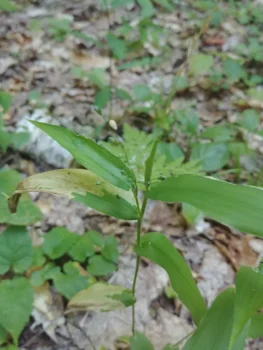
Broadleaf Rosette Grass: A Native Shade-Tolerant Grass Worth Considering
If you’re searching for a native grass that can handle some shade and won’t demand constant attention, broadleaf rosette grass (Dichanthelium latifolium) might just be the unsung hero your landscape has been waiting for. This perennial grass may not win any flashy flower contests, but it brings something special to the table: reliable native performance with minimal fuss.
What Is Broadleaf Rosette Grass?
Broadleaf rosette grass is a native North American perennial grass that forms attractive clumps rather than spreading aggressively. You might also encounter it under its former scientific name, Panicum latifolium. This grass reaches a modest height of about 3.3 feet and features fine-textured, green foliage that creates a soft, natural appearance in the landscape.
Unlike many grasses that demand full sun, this species has developed an intermediate tolerance for shade, making it a valuable option for those tricky spots where other grasses struggle to thrive.
Where Does It Call Home?
This grass has quite the impressive native range, stretching across much of eastern and central North America. You’ll find it naturally occurring from Canada down through the eastern United States, with its range extending from Maine to Texas and from the Atlantic coast to the Great Plains. It grows in states including Alabama, Arkansas, Connecticut, Delaware, Georgia, Illinois, Indiana, Iowa, Kansas, Kentucky, Maine, Maryland, Massachusetts, Michigan, Minnesota, Mississippi, Missouri, Nebraska, New Hampshire, New Jersey, New York, North Carolina, Ohio, Oklahoma, Pennsylvania, Rhode Island, South Carolina, Tennessee, Texas, Vermont, Virginia, West Virginia, and Wisconsin, plus Ontario and Quebec in Canada.
- Species observed
- No observations
Why Consider This Native Grass?
Here’s where broadleaf rosette grass really shines as a garden choice:
- Shade tolerance: Unlike most grasses that wither in shade, this species can handle intermediate shade levels
- Native authenticity: Supporting local ecosystems while requiring fewer inputs
- Low maintenance: Once established, it has low fertility requirements and medium drought tolerance
- Non-aggressive: Forms neat bunches without taking over your garden
- Seasonal interest: Active growth period in summer with green foliage
What Role Does It Play in Your Landscape?
Think of broadleaf rosette grass as your landscape’s dependable supporting actor. It’s perfect for:
- Woodland gardens: Its shade tolerance makes it ideal for naturalizing under trees
- Native plant gardens: Adds authentic local character while supporting regional ecosystems
- Low-maintenance areas: Great for spots where you want something attractive but not demanding
- Transition zones: Works well in areas between formal gardens and wild spaces
The fine texture and bunching growth habit create a soft, naturalized appearance that complements wildflowers and other native plants beautifully.
Growing Conditions That Make It Happy
Broadleaf rosette grass is pleasantly adaptable, but it does have some preferences:
- Soil: Prefers acidic conditions (pH 4.0-6.5) and adapts well to coarse or medium-textured soils
- Sunlight: Intermediate shade tolerance – can handle partial shade unlike many grasses
- Water: Low moisture requirements once established with medium drought tolerance
- Climate: Hardy in USDA zones 3-9, tolerating temperatures as low as -43°F
- Fertility: Low fertility requirements – actually prefers not to be overfed
This grass has a wetland status of Facultative Upland, meaning it typically grows in non-wetland areas but can occasionally tolerate wetter conditions.
Planting and Care Tips
Growing broadleaf rosette grass successfully is refreshingly straightforward:
Starting from seed: This grass propagates primarily by seed, with about 210,000 seeds per pound. Spring is the bloom period, with seeds developing from summer through fall. Be patient – seed spread rate is slow, and seedlings show medium vigor.
Establishment: Plan for slow establishment initially, but once settled, this grass has a rapid growth rate during its active summer growing period. The minimum root depth is just 4 inches, so it doesn’t need deep soil preparation.
Ongoing care: This is where broadleaf rosette grass really earns its keep. It requires minimal fertilization (remember those low fertility requirements), has medium drought tolerance once established, and won’t need constant babying.
Long-term expectations: While classified as having a short lifespan, this refers to individual plants in wild populations. In garden settings with appropriate care, you can expect reliable performance for several years.
What About Wildlife and Pollinators?
As a native grass, broadleaf rosette grass provides valuable habitat structure for wildlife, though it doesn’t offer showy flowers for pollinators since it’s wind-pollinated. The seeds may provide food for birds and small mammals, and the grass structure offers cover and nesting materials.
The Bottom Line
Broadleaf rosette grass won’t be the star of your garden, but it might just be the reliable ensemble cast member that ties everything together. If you’re looking for a native grass that can handle some shade, doesn’t demand constant attention, and adds authentic local character to your landscape, this species deserves serious consideration.
It’s particularly valuable for gardeners who want to incorporate more native plants but are working with challenging conditions like partial shade or acidic soils where other grasses might struggle. Sometimes the best garden choices are the ones that simply do their job well without making a fuss about it.