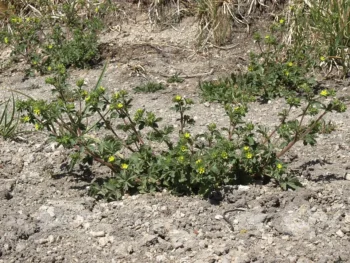
Brook Cinquefoil: A Humble Native for Wet Spots in Your Garden
If you’re looking for a low-key native plant that thrives in those soggy spots where other flowers fear to tread, meet brook cinquefoil (Potentilla rivalis). This unassuming little wildflower might not win any beauty contests, but it’s got some serious staying power and a few tricks up its sleeve that make it worth considering for the right garden situation.
What Exactly is Brook Cinquefoil?
Brook cinquefoil is a native North American annual or biennial forb—basically a non-woody herbaceous plant that completes its life cycle in one to two years. Don’t let the fancy botanical name intimidate you; this is simply a small, yellow-flowered member of the rose family that has been quietly doing its thing in wet places across the continent for centuries.
You might also encounter this plant listed under several synonyms in older gardening references, including Potentilla leucocarpa, Potentilla millegrana, or Potentilla pentandra, but they’re all referring to the same humble species.
Where Does Brook Cinquefoil Call Home?
This adaptable native has one of the most impressive geographic ranges you’ll find in North American wildflowers. Brook cinquefoil naturally occurs across Canada in Alberta, British Columbia, Manitoba, Ontario, and Saskatchewan, and throughout much of the United States including Arizona, Arkansas, California, Colorado, Idaho, Illinois, Iowa, Kansas, Maine, Maryland, Massachusetts, Minnesota, Missouri, Montana, Nebraska, Nevada, New Mexico, New York, North Dakota, Oklahoma, Oregon, South Dakota, Texas, Utah, Virginia, Washington, Wisconsin, and Wyoming.
- Species observed
- No observations
The Wetland Wonder
Here’s where brook cinquefoil really shines: it’s classified as a Facultative Wetland plant across all regions of North America. This means it usually hangs out in wetlands but can tolerate drier conditions when needed. Think of it as nature’s compromise plant—happiest with wet feet but flexible enough to survive when the going gets tough.
Should You Plant Brook Cinquefoil?
The honest answer depends on what you’re after in your garden. Brook cinquefoil isn’t going to stop traffic with stunning blooms or create dramatic focal points. What it will do is:
- Provide reliable ground cover in consistently moist areas
- Support small pollinators with its modest yellow flowers
- Self-seed readily, creating naturalized colonies over time
- Require virtually no maintenance once established
- Thrive in conditions where many other plants struggle
It’s perfect for gardeners who want to support native ecosystems, need something for problem wet spots, or prefer low-maintenance naturalistic plantings over high-impact ornamental displays.
Growing Brook Cinquefoil Successfully
The beauty of brook cinquefoil lies in its simplicity. This plant is remarkably unfussy once you understand its basic preferences:
Growing Conditions
- Moisture: Consistently moist to wet soils (though it can tolerate some drying)
- Light: Full sun to partial shade
- Soil: Tolerates poor soils and various soil types
- Climate: Hardy in USDA zones 3-9
Planting Tips
- Direct seed in fall or early spring when temperatures are cool
- Scatter seeds on moist soil surface—they need light to germinate
- Space isn’t critical since this plant will find its own comfortable density
- Consider mixing with other wetland natives for a more diverse planting
Care and Maintenance
- Water during establishment, then let nature take over
- No fertilizing needed—this plant prefers lean conditions
- Allow plants to self-seed for natural colony expansion
- Minimal to no pruning required
The Bottom Line
Brook cinquefoil isn’t flashy, but it’s authentic—a true native that serves an important ecological role while asking for very little in return. If you have wet areas in your landscape that need reliable, low-maintenance ground cover, or if you’re creating habitat for small pollinators, this modest wildflower deserves consideration.
Just remember to set appropriate expectations. You’re not planting brook cinquefoil for dramatic garden impact—you’re planting it to be a quiet, dependable team player in your native plant community. Sometimes that’s exactly what a garden needs.