Broom Sedge: A Hardy Native Grass for Every Garden
Meet Carex scoparia, commonly known as broom sedge – a wonderfully versatile native sedge that’s been quietly beautifying North American landscapes for centuries. Don’t let its modest appearance fool you; this unassuming perennial grass-like plant packs a serious punch when it comes to ecological value and garden practicality.
What Makes Broom Sedge Special?
Broom sedge is what we call a true native – and when we say true native, we mean it! This remarkable sedge naturally occurs across an impressive range that includes most of Canada and virtually all of the lower 48 states. From Alberta to Alabama, from British Columbia to Rhode Island, broom sedge has been thriving in diverse climates and conditions long before European settlers arrived.
This widespread distribution spans numerous states and provinces: Alberta, Alabama, British Columbia, Manitoba, New Brunswick, Arizona, Arkansas, California, Nova Scotia, Ontario, Colorado, Prince Edward Island, Connecticut, Quebec, Delaware, District of Columbia, Georgia, Idaho, Illinois, Indiana, Iowa, Kansas, Kentucky, Louisiana, Maine, Maryland, Massachusetts, Michigan, Minnesota, Mississippi, Missouri, Montana, Nebraska, New Hampshire, New Jersey, New Mexico, New York, North Carolina, North Dakota, Ohio, Oklahoma, Oregon, Pennsylvania, Rhode Island, South Carolina, South Dakota, Tennessee, Utah, Vermont, Virginia, Washington, West Virginia, Wisconsin, Wyoming, and Newfoundland.
- Species observed
- No observations
Garden Appeal and Design Role
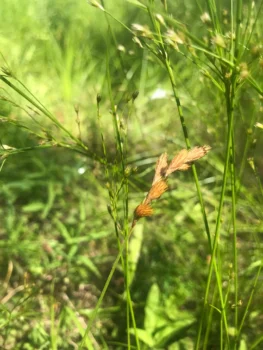
While broom sedge might not win any flashy flower contests, it brings something equally valuable to your garden: reliable structure and movement. This clump-forming sedge grows to about 2.5 feet tall with narrow, arching green foliage that creates beautiful texture contrasts when paired with broader-leaved plants.
The plant produces inconspicuous green flowers in late spring, followed by brown seed heads that add subtle interest through summer. Though not particularly showy, these characteristics make broom sedge an excellent supporting player in native plant communities and naturalized landscapes.
Perfect for Wet Spots (And More!)
Here’s where broom sedge really shines – it’s classified as Facultative Wetland across all regions of North America. This means it usually grows in wetlands but can adapt to drier conditions too. Talk about flexibility! If you’ve got those challenging wet spots in your yard where other plants struggle, broom sedge could be your answer.
This adaptability makes it ideal for:
- Rain gardens and bioswales
- Pond and stream edges
- Low-lying areas that collect water
- Prairie and meadow restorations
- Naturalized landscaping
Growing Conditions and Care
Broom sedge is remarkably easygoing, thriving in USDA hardiness zones 3-9. It prefers medium to fine-textured soils and has a high tolerance for wet conditions (perfect for those soggy areas!). While it can handle some shade, it performs best with adequate sunlight.
Key growing requirements include:
- pH range: 4.6 to 6.9 (acidic to slightly acidic)
- High moisture needs when establishing
- Medium fertility requirements
- Minimum temperature tolerance down to -38°F
- Frost-free growing period of at least 85 days
The plant has a moderate growth rate and forms bunching clumps rather than spreading aggressively – a trait many gardeners appreciate!
Planting and Establishment
Good news for budget-conscious gardeners: broom sedge is routinely available commercially and can be propagated through several methods. You can start plants from seed, bare root specimens, or sprigs. However, keep in mind that seedling vigor is relatively low, so patience is key during establishment.
For best results:
- Plant in spring or early fall
- Ensure consistent moisture during the first growing season
- Space plants appropriately (roughly 2,700 to 4,800 per acre for large installations)
- Be patient – this is a slow starter but long-lived once established
Wildlife and Ecological Benefits
While broom sedge flowers aren’t magnets for pollinators (being wind-pollinated), the plant offers valuable habitat and food sources for wildlife. The seeds provide nourishment for various bird species, and the dense clumps offer shelter for small creatures. As a native species, it supports local food webs in ways that non-native alternatives simply can’t match.
Is Broom Sedge Right for Your Garden?
If you’re looking for a reliable, low-maintenance native plant that can handle challenging wet conditions while providing subtle beauty and ecological value, broom sedge deserves serious consideration. It’s particularly perfect for gardeners who want to support local ecosystems, manage stormwater naturally, or create authentic native plant communities.
Just remember: this isn’t a plant for impatient gardeners seeking immediate dramatic impact. Broom sedge rewards those who appreciate subtle beauty, ecological function, and the satisfaction of growing truly native species. In a world of flashy garden superstars, sometimes the quiet performers like broom sedge are exactly what our landscapes need most.